

4 Potential Spray Paint Health Risks & What To Do If You Experience Them

Aerosolized sprays — no matter their intended purpose — are something to be careful around. For one, these are items that should not be left in a hot car because the heat could create enough pressure to cause an explosion, or even fire if their contents are flammable. Spray paint is one aerosolized spray that carries its own unique sets of health risks you'll want to keep in mind whenever you use it. These potential risks may vary depending on the type of spray paint you use, with latex- and water-based paints being less toxic than mixtures with high levels of volatile organic compounds (VOCs).
VOCs are commonly found in spray paint and have been associated with various health effects — from short-term symptoms such as headaches and eye irritation, to organ damage, coordination impairment, or an increased risk of cancer from long-term exposure. This is why it is recommended to read all paint labels carefully, only spray in well-ventilated areas, take frequent breaks, and wear goggles and a respirator if you intend to use them. Here are five common health risks associated with short-term exposure to spray paint and what you should do if you experience them. And when in doubt, if your symptoms persist, get in touch with your doctor.
Skin irritation

Direct contact with exposed skin can lead to skin irritation, which is why it's important to cover up as much as you can while spraying. In the event that you do get some spray paint on yourself, and you start to feel or otherwise notice irritation at or around the point of contact, you'll want to address it immediately. So, stop spraying, put the cap back on the can (or equivalent cover/safety depending on your spray apparatus) to prevent any potential leaking vapors. Then, Healthline recommends you go thoroughly wash the area with soap and warm water.
Really, even if you don't experience any irritation, it's still a good idea to take a breather and wash up. However, the official Poison Control website notes that you should not try to clean any spray paint off of your body by using paint removers, as these are just as likely to irritate your skin as the paint itself — if not more. Stick with regular soap and warm water, and repeat the process as necessary if you don't get all of the paint off in the first attempt.
Eye irritation
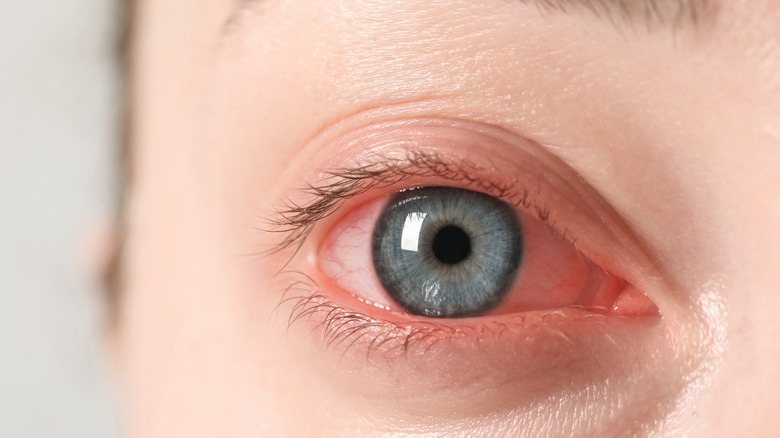
Getting anything in your eye that's not supposed to be there isn't good, but you definitely don't want to get spray paint in there. It doesn't have to be a big blob of paint, either: Even imperceptible little particles could potentially float through the air and make their way into your peepers. Health Canada highly recommends that you wear goggles while spraying to prevent this from happening in the first place. In the event that your eyes start to hurt, itch, water, or burn while you're spraying, however, you'll want to take care of things right away.
Immediately stop spraying, close up your paint to avoid any leaking fumes, and go wash your eyes. According to Healthline, you should rinse them with running water for roughly 15 to 20 minutes. Once you're finished rinsing. It's important to give your eyes time to rest, so find a comfortable spot to settle in and keep them closed for another 15 minutes. This should take care of mild eye irritation (though definitely put on or keep using goggles if you go back to spraying). If you begin to experience pain or problems with your vision, though, you need to seek medical attention right away.
Headache, dizziness, or nausea

Much like the potential health risks of WD-40, using spray paint without the proper precautions can lead to unpleasant side effects like dizziness, headaches, and nausea. That is why the instructions always advise spraying outdoors or in a well-ventilated area (while wearing a respirator). If you do start to feel any of these symptoms, the first thing you should do immediately is put the paint down, cap it off to prevent the leakage of paint fumes while you're away, and move to an area with fresh air.
For headaches, give the feeling time to pass. If you decide to get back to work once you're feeling better, make sure to take protective measures and either open some windows in the area you're spraying, or move your project (if possible) to another spot with proper ventilation.
Poison Control recommends that, should nausea occur, rest for a few minutes and sip some water (or possibly a little milk). Just be sure to take it slow when drinking, and if the nausea persists, or if you also begin to experience diarrhea or vomiting, call Poison Control (800-222-1222) or use the webPoisonControl website immediately. You should also contact Poison Control right away if you're feeling dizzy or lightheaded. The center also warns that, if you suspect a bit of swallowed paint might be the cause, it may appear in stool a couple of days afterward.
Allergic reactions

A respirator is one of many important precautions you should take in order to stay safe while woodworking, and spray painting is no different. Preventative measures are very important and will often reduce or even avoid these kinds of health effects. Anything resembling an allergic reaction (coughing, sneezing, wheezing, chest tightness, asthma-like symptoms) shouldn't be taken lightly.
For mild reactions, relocate to an area with fresh air and give your body time to recover before attempting to go back to spray painting. If the symptoms don't go away after moving to a well-ventilated area, Poison Control recommends taking a warm shower and washing your hair, presumably to remove particles on your body and clothes that might be causing the irritation to continue.
If, however, you're having trouble breathing, seek immediate medical help. Returning to the spray area at any point while experiencing or recovering from this kind of severe allergic reaction should be avoided at all costs. Once you are in the clear to resume spraying, make sure the area is well-ventilated and that you're wearing a respirator moving forward. It wouldn't hurt to check the offending paint cans to see if any particular chemicals might have been the cause, and to switch to a different kind of spray paint if possible.
Methodology
This list was compiled from other breakdowns of spray paint health risks and treatments from Healthline, the Environmental Protection Agency (EPA), and Canada's national health department. It focuses on more immediate, short term effects that one might experience when spray painting and was organized by our subjective idea of severity (least to most).