

This Navy Torpedo Recovery Vessel Is South Carolina's Newest Ocean Reef
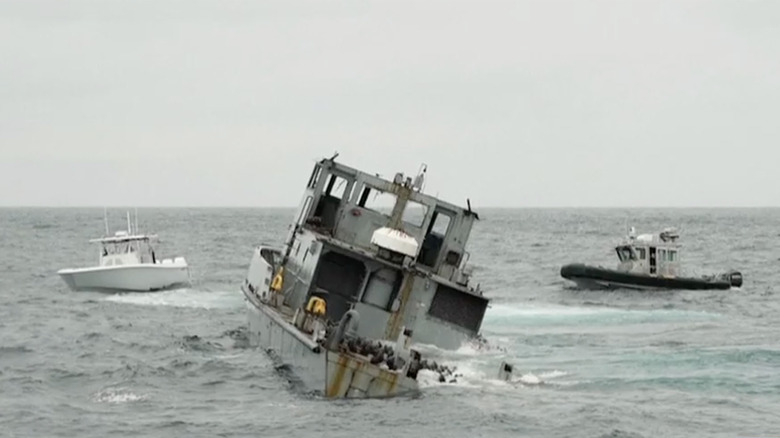
Where does an arrest, environmental preservation, and the fate of a 120-foot-long former U.S. Navy torpedo recovery ship all come together? On the coasts and waterways of South Carolina. That's where a years-long environmental and legal ordeal recently came to a close with the intentional sinking of the ex-Navy ship, putting a decommissioned vessel in its final resting place and beginning its transformation into a man-made reef. Up until recently, the abandoned vessel, originally known as TWR-8419 and then renamed HAZAR, had become a symbol of a growing problem of derelict boats on South Carolina's waterways, not just as an eyesore or navigational hazard, but as a potential environmental disaster waiting to happen.
TWR-8419 is far from the first ship to be turned into an artificial reef. The legendary SS United States, for example, is currently waiting to meet the same fate. Nor is this torpedo ship the first artificial reef in South Carolina's coastal waters. But the sinking of the vessel does represent the ideal conclusion of a public saga that's been brewing for over four years, with the retired ship finally going from a possible environmental nightmare to the opposite — a major benefit for both wildlife and local recreational fishermen.
Abandoned and neglected
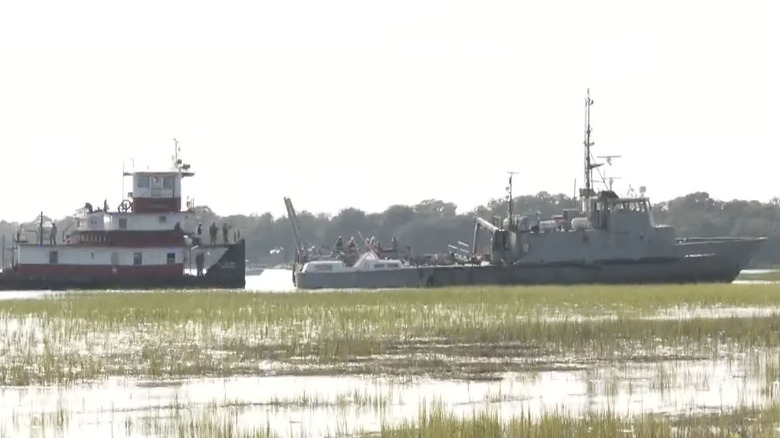
Though you won't find many torpedo recovery boats, or range craft as they're often known today, on the lists of history's most important warships, these vessels nonetheless play an important role in the fleet. Their primary job is, as the name suggests, the tracking and recovery of torpedoes, underwater targets, and other equipment during torpedo training exercises and testing. But how does one of these ships end up abandoned and stuck in the mud outside of Charleston, South Carolina?
TWR-8419 was originally built in 1986 and, after being retired from service, was sold at federal auction in 2021 for $81,600 – and this is when things start to get ugly. The ship ended up being too large to be registered by the state, and the owner never bothered to obtain federal documentation for it. And so the ship sat in a creek just off the coast, stuck in the mud, with the owner refusing to comply with Coast Guard orders to get proper documentation or to do anything about the vessel. The owner then became unreachable, and the ship was essentially abandoned.
Abandoned vessels are a common and growing problem on these waterways, but typically they are smaller sailboats and other pleasure craft, not former Navy ships that were over a hundred feet long. Not only did it stick out like a sore thumb, but it also represented a possible major environmental hazard should the abandoned, immobile ship start leaking fluids or contaminating the waters.
A new purpose underwater
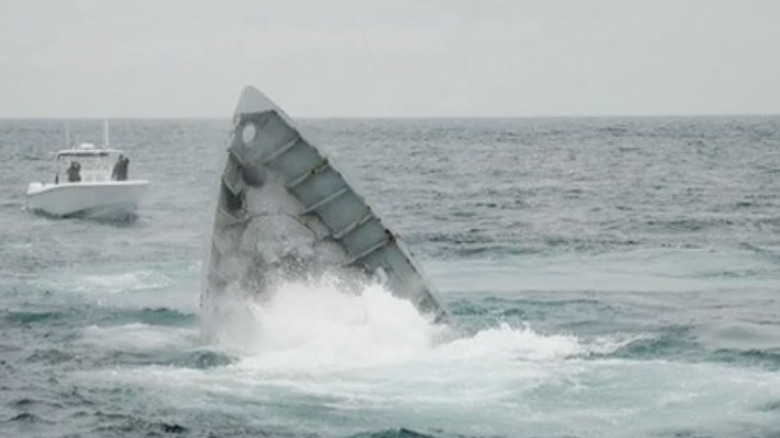
Finally, after years of investigation by the South Carolina Department of Natural Resources, the responsible party was arrested, and plans were made to finally remove the vessel from the marsh. But rather than just towing the ship out and sending it to be scrapped, a plan was devised as part of a collaboration between the Department of Natural Resources and Coastal Conservation Association South Carolina for the ship to be turned into an artificial reef.
Of course, turning an old ship into a reef isn't as simple as just dumping it under the sea. First, the ship had to be fully stripped of any motors, fluids, or other equipment that could possibly be an environmental problem. Only then could the vessel be towed out to sea and sunk to the bottom of the ocean, where it will now become South Carolina's 612th artificial reef, and what should be a thriving habitat for migrating fish and a popular destination for recreational anglers.
Even better, divers will be able to access the HAZAR reef as well, making TWR-8419 another one of the many shipwrecks that adventurers can visit and explore around the world. Though it took years to get there, this strange situation ended up being a win-win for both locals, who no longer have to deal with an eyesore and environmental threat, and for divers, fishermen, and marine life who now get a safe new underwater habitat to use.