

A Major US Navy Frigate Program Was Canceled (But Here's What's Being Built Instead)
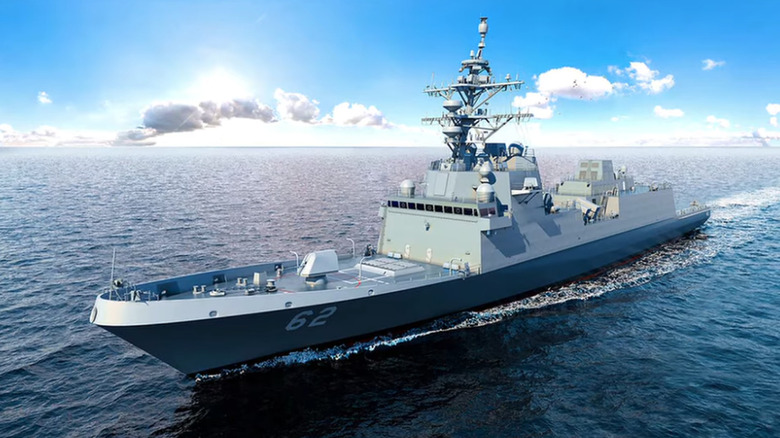
The U.S. Navy has decided to step back from its Constellation-class frigate program in favor of faster-to-build vessels and a new, American-designed frigate. That means the cancellation of four previously planned warships, effectively capping the class at just two hulls. Under an agreement with shipbuilder Fincantieri Marinette Marine, considered one of the top U.S. Navy ship manufacturers, construction will continue on the USS Constellation (FFG-62) and USS Congress (FFG-63), while the remaining ships (which had not yet begun construction) will be outright terminated. Senior defense officials feel the move reflects a broader effort to streamline shipbuilding and accelerate delivery timelines across the fleet.
The cancellation comes after comments in November 2025 from Defense Secretary Pete Hegseth, who said he felt there was a general "absence of urgency" in the current delivery of U.S. military capability, according to Politico. Moving forward post-Constellation, Navy officials will be conducting a fleet design review that will shape future ship classes and procurement strategies. That includes how the U.S. Navy will meet a requirement for more than 70 other small surface combatants such as Littoral Combat Ships designed to operate close to shore. While the Constellation program was originally intended to fill that role, delays and rising costs ultimately got in the way. A final replacement for the frigate hasn't been confirmed, but a new ship design based on the Legend-class National Security Cutter used by the U.S. Coast Guard is currently the front-runner.
Why the Constellation class fell apart
The modern Constellation class is classified as a frigate, one of the seven types of modern warships used by many navies around the world, and was originally envisioned as a faster, lower-risk alternative to the Littoral Combat Ship. Marinette was awarded the contract to build back in 2020 following roughly six years of deliberation. The design was a modified version of the European FREMM frigate, which was already being operated by France and Italy.
This approach was supposed to save time by leveraging an existing design. Instead, it resulted in a number of changes required to meet U.S. Navy survivability and systems standards. That turned what was supposed to be a relatively straightforward adaptation into a complex redesign that pushed the delivery of the first ship from 2026 to 2029 and added roughly $1.5 billion in costs.
By the time the Navy reassessed the program, the Constellation-class frigate cost about 80% as much as a destroyer while delivering only around 60% of the capability. Congress had set aside $7.6 billion for six ships, but the Navy has already spent about $2 billion on the program, which obviously raised some big questions about how they'd make do with less than that $7.6 billion.
Constellation class replaced by faster ships and a new frigate

While the Constellation class is ending, frigates themselves are not going anywhere. The White House has already approved adding a new frigate under President Trump's Golden Fleet initiative, a future force concept focused on countering vessels like China's newest next-gen naval warship with a mix of large surface combatants, smaller manned ships, and other unmanned vessels. The new U.S. Navy frigate will be based on an American design that locks in requirements before construction begins, a stark contrast to the change orders that caused so much strain with the Constellation class.
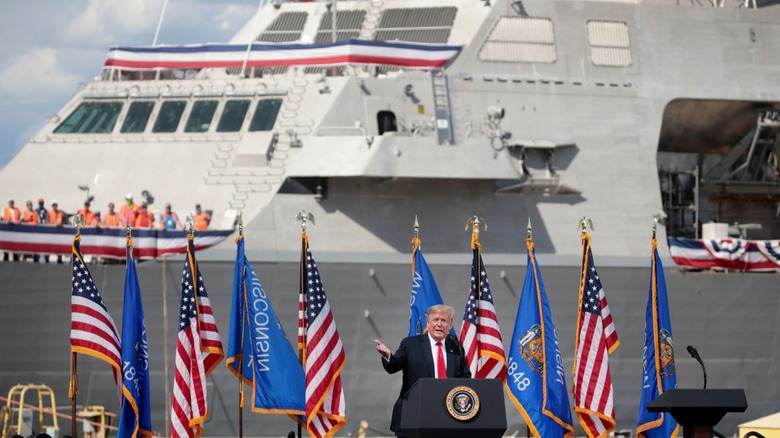
At the same time, the Navy is looking to channel work into platforms that can be delivered sooner. Marinette will still be building the two frigates already underway, along with its final Freedom-class Littoral Combat Ship. After that, the U.S. Navy will be accelerating programs such as the Landing Ship Medium and large unmanned surface vehicles to be built in Wisconsin. Additionally, the Navy is investigating the possibility of partnering more closely with efficient shipbuilding allies like South Korea and Japan to ensure American interests; South Korea's Hanwha Ocean shipyard, which received certification in 2024 for working on U.S. Navy noncombat vessels, could be one of the sites of new ship construction.