

New Law Could Mean Increased Fines For Two-Wheel Drive Cars In Colorado
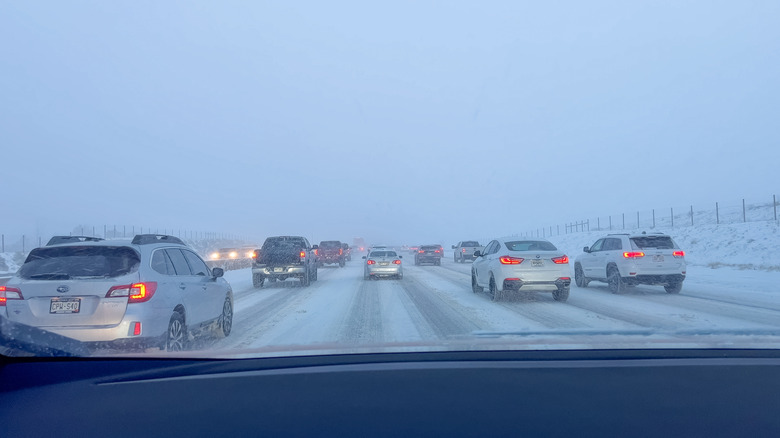
Heading to the mountains of Colorado this winter? If your car only has two-wheel drive, you have some extra work ahead. State transportation officials have put new traction and chain laws into effect along the I-70 corridor and other highways throughout the state. When CDOT activates the Traction and Chain Laws due to inclement weather, two-wheel drive cars traveling on those highways must have snow tires and a traction device.
The new statewide law was put in place earlier this year. It requires all cars traveling between Dotsero and Morrison from September through May to be all-wheel or four-wheel drive and to carry approved chains or traction devices. Two-wheel drive vehicles need both. To find out if yours qualifies, they've put together a handy guide on their website. And if you get caught without? Under CDOT's updated Passenger Vehicle Traction Law, drivers risk getting slapped with a moderate fine of $50 (plus a $17 surcharge).
To avoid getting charged, all 2WD drivers must have a traction device paired with winter, all-weather, or mud-and-snow tires with a minimum tread depth of 3/16 inch. All 4WD/AWD vehicles need snow tires, too, but if theirs fall outside those parameters, they can get away with tire chains or an approved alternative. During severe storms, every vehicle (regardless of tires or drivetrain) has to install chains or an accepted device before getting on the highway.
The new law could cause headaches for out-of-towners
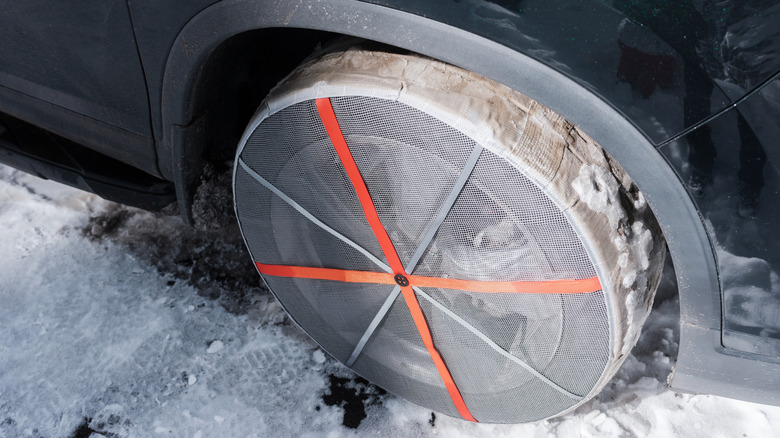
If you're native to Colorado, you might already do these things anyway. But for people traveling from out of state to go skiing? They need to be aware of the fact that their car might get them into trouble this winter. Rental car agencies are also obligated by law to tell customers whether their vehicle complies with the winter driving requirements. It's bound to put some pressure on those agencies if storms get bad this season. That said, once they tell renters, it becomes the renter's responsibility to make sure they have the proper tire chain or tire chain alternative for snowy or icy conditions.
Colorado State Patrol officials said drivers should expect strict enforcement as storms develop this month and into 2026, especially considering the way I-70's steep grades and unpredictable conditions often lead to pileups. (No wonder drivers consider it one of the worst states to drive in.) Troopers and CDOT representatives should probably expect some early frustration among drivers and rental companies as everyone adjusts to the rules. But, with any luck, it'll catch on fast and keep everyone on Colorado roads safer this winter.