

7 Of The Most Dangerous F1 Tracks In The World, Ranked
Throughout its 75-year history, Formula One has raced at just about every type of racetrack. While some tracks have become staple venues for the sport, such as Silverstone and Monza, we've seen a few circuits come and go that all present their own unique challenges. Today, safety has become paramount for the pinnacle of motorsport, with decades of development making the current cars incredibly safe. Turn back the clock 40 or 50 years, and F1 was incredibly dangerous, not just because of the lack of safety in the cars themselves, but also because of the tracks they raced on.
The Nurburgring Nordschleife is still regarded as the most dangerous track in the world by mainly, it was only exacerbated by how exposed drivers were until its last race on the calendar in 1976 due to Niki Lauda's crash. Other tracks, such as the original banked Monza layout and Circuit de Charade, were eventually deemed far too treacherous for the sport. While modern circuits are the best of the best when it comes to safety standards, there are still a few circuits on the current calendar that stand out for their heightened risks. Whether it's due to high speeds, blind corners, concrete walls on either side of the driver, or all of the above, these seven tracks pose the biggest challenge for the grid to extract every last bit of performance from their laps.
Circuit Zandvoort
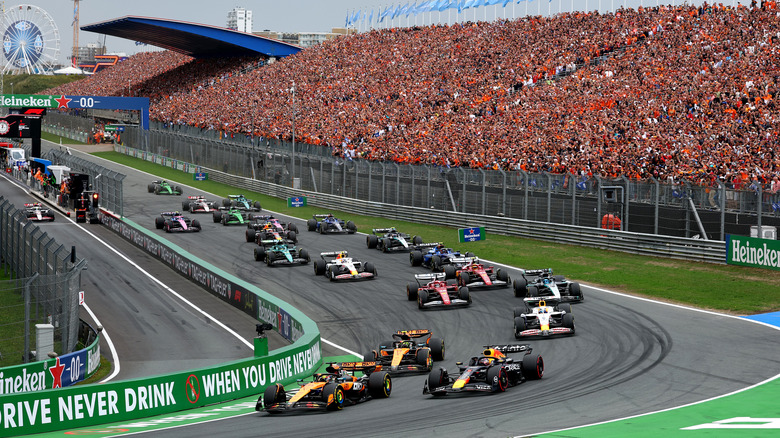
Located a stone's throw away from the North Sea, Zandvoort has only been on the F1 calendar in its current guise since 2021. Helped massively by four-time champion Max Verstappen's popularity, the current layout is far different from the original track that left the sport in 1985. Only the first sector remains similar. Like many other older circuits, Zandvoort used to be much longer, high-speed, and severely lacking safety measures throughout the track. Current circuits now go through rigorous safety tests. Even so, the new layout presents a host of new challenges that can bite incredibly quickly.
Instead of long straights, Zandvoort's current layout comprises very fast turns with almost constant changes of direction, which, coupled with the narrow track, makes for one of the most challenging circuits on the calendar. The natural banking and elevation before and during corners can also make it trickier to judge where to position the car, leaving drivers victim to touching the grass, gravel, or riding one of the many aggressive curbs throughout the track. Due to its proximity to the sea, the weather can sometimes be incredibly difficult to navigate, which we saw during the 2023 Grand Prix. We've seen some sizable accidents over the years, such as Sargeant's shunt in practice, but moving into 2026, Zandvoort has been dropped from the calendar once again.
Monaco Circuit
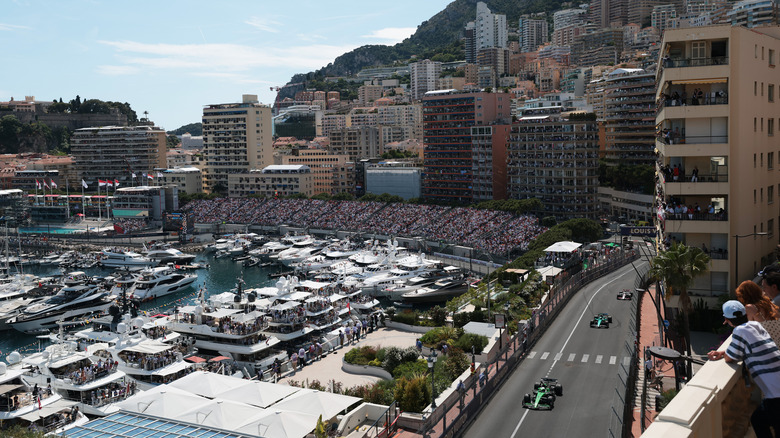
One of the most iconic and controversial tracks on the calendar is none other than Monaco. With Grand Prix racing through the principality pre-dating Formula 1 itself, Monaco is one of the few races that has been on the calendar since the championship's inception in 1950. Its only absence was in 2020 due to the COVID pandemic. Monaco has always been one of the races that every driver so desperately wants to win, seeing it as one of Motorsport's most illustrious victories. However, due to its next-to-zero overtaking opportunities, many fans don't think it deserves its place in the sport anymore. Given today's cars are so hard to follow, we're hoping the upcoming 2026 regulations can improve racing, with some track changes to further encourage good racing.
While there might not be much wheel-to-wheel action, the qualifying session is usually one of the most electric of the year due to the extreme precision to conquer the track, requiring drivers to be millimeters from the wall for the majority of the lap. Sector one is very high speed as drivers climb up to Casino Square, with the final two sectors featuring fast, sometimes blind corners. The consequences of pushing too hard aren't as big as they once were, but in the last few years, we've seen a huge three-car crash at the start of the 2024 race, as well as Schumacher ripping his car in half in 2022, to name a couple of incidents.
Suzuka Circuit
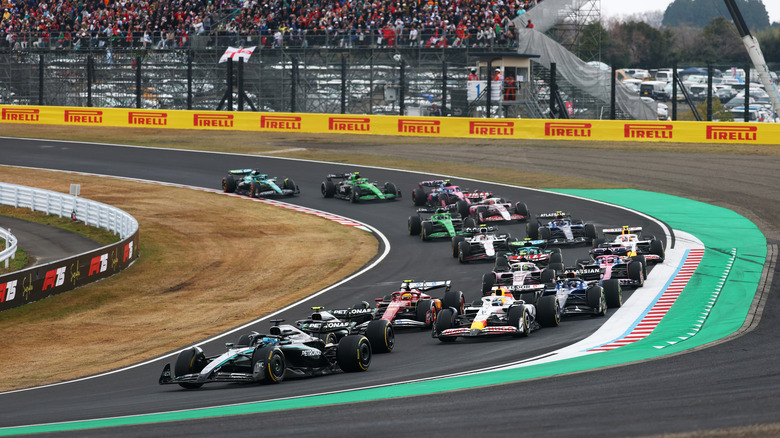
Formula 1 has raced at a few different tracks in Japan over the years, but Suzuka has been the home for the nation's Grand Prix for the longest overall. Like Zandvoort, Suzuka is one of the old-school circuits on the modern calendar, but unlike the Dutch circuit, this one has remained primarily the same since its construction in 1962. It's the only track figure-of-eight layout with the back straight running over the middle of the circuit, and drivers frequently cite it as one of the most enjoyable to drive.
What makes the track so much fun to drive is also what makes it so punishing. Like most old-school tracks, Suzuka is very tight, with chains of fast direction changes featuring throughout, but particularly in the first half of the lap. If you run wide or hit one of the curbs wrong, the speeds drivers are required to drive at in modern F1 can be a recipe for disaster. Even in areas with plenty of runoff, hitting the barriers is still a strong possibility, most notably with Jack Doohan's crash this year. Wet weather can also make the already highly technical track much harder to navigate, leading to fatal accidents due to aquaplaning in combination with the track's inherent speed.
Imola Circuit (Autodromo Internazionale Enzo e Dino Ferrari)
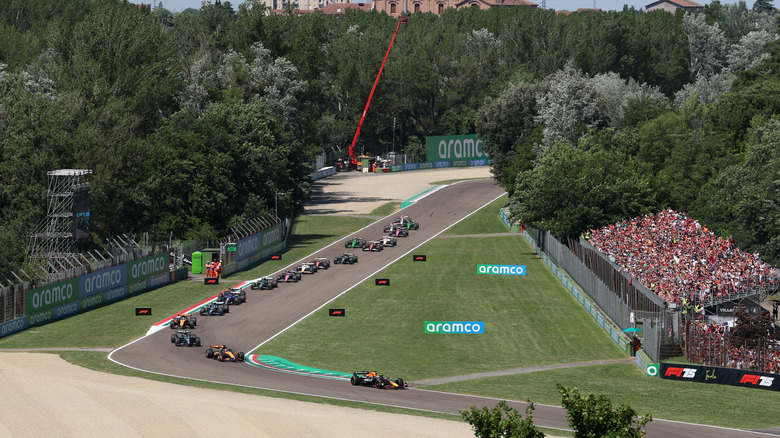
The new tracks introduced to Formula 1 are mainly street circuits, with Las Vegas being the most recent addition. However, in 2026, Madrid will take the spot of an iconic venue: Imola. Making its return in 2020 to help bolster the calendar during the pandemic, the Imola Circuit is similar to tracks like Suzuka, being very narrow and full of high-speed turns that'll quickly send you into the gravel or barrier if you misjudge them. Another classic old-school track.
Yuki Tsunoda was involved in a massive crash this year in qualifying, which was caused by bottoming out on the inside kerb that features in the image above. Flipping into the barriers, he was fortunately unharmed, but his crash was a reminder of how one seemingly small error can have major consequences at a track like Imola. Russell's attempted move on Bottas down the main straight in 2021 also displayed how hard it is to go side-by-side here, although those cars were the largest the sport has ever seen. One of motorsports' darkest weekends occurred here in 1994, which saw Roland Ratzenberger and Ayrton Senna tragically pass away after individual accidents, as well as Rubens Barrichello having a huge crash. The track has since been altered to slow speeds in some areas to prevent crashes, along with more runoff and gravel traps in a bid to prevent cars from hitting the wall so heavily.
Baku City Circuit
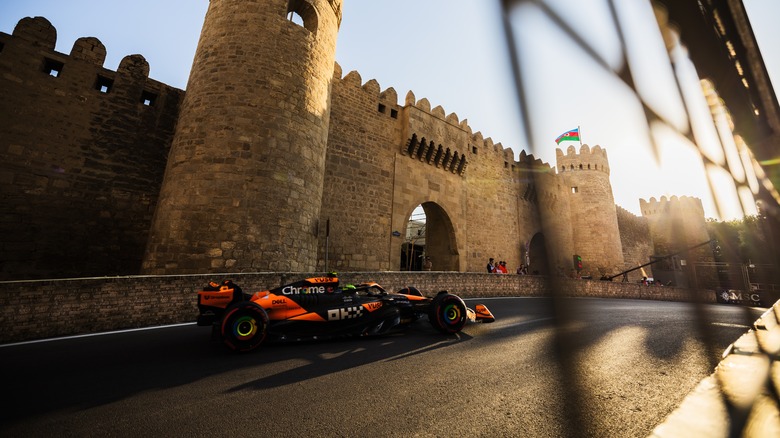
Keeping on the topic of street circuits, Baku is one that many fans look forward to, thanks to providing some dramatic races since its introduction in 2016. Without a doubt, one of the most unique circuits on the calendar, the Baku City Circuit has a little bit of everything throughout the 3.7-mile lap. The first sector is full of 90-degree turns that require late braking and precise entry to gain time, with the middle sector slowing things down massively throughout the now-iconic castle section. The final sector is the fastest part of the street track, particularly with the longest straight in the series finishing off the lap, where Valterri Bottas achieved record-breaking speeds in his Williams.
It's a very different type of street circuit compared to Monaco, but similar to how chaotic qualifying on Saturday can be with drivers pushing to get the best time possible. While accidents are almost expected around Baku by this point, 2025 saw six red flags during qualifying, the most in the sport's history. Many of the crashes are due to taking too much speed into the slow-speed corners and hitting the wall on the exits, but the final straight poses its own risks. Both Max Verstappen and Lance Stroll suffered big crashes in 2021 due to tire failures, with Verstappen luckily not veering off towards the pit entry that Nico Rosberg called 'the most dangerous of the whole year' in his breakdown of the circuit.
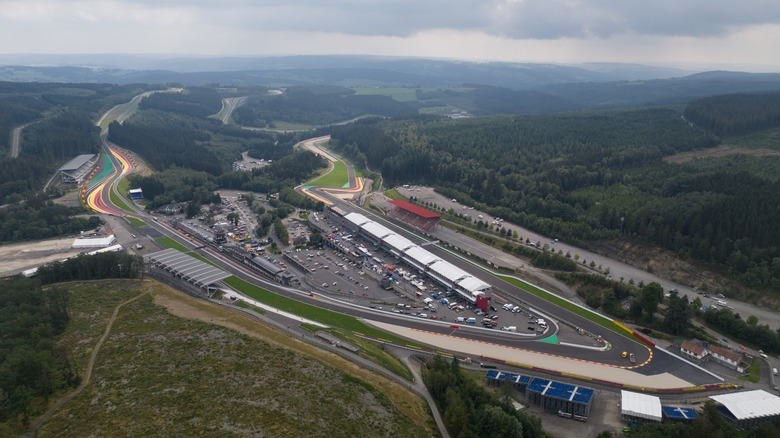
Spa-Franchorchamps
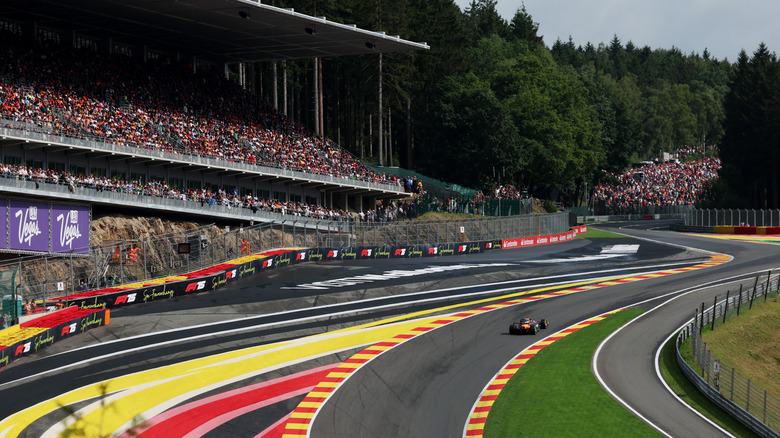
Deep within the Ardennes region of Belgium, Spa-Francorchamps is another track that featured on the original 1950 calendar and has appeared every year (aside from 2020) like Monaco. Spa has everything that a driver could want on a racetrack, particularly behind the wheel of an F1 car, with fast, flowing turns embedded into the landscape, resulting in massive elevation changes throughout the lap. Verstappen called it his 'favorite track on the calendar' in an interview with F1 in 2020.
While the track may be a great challenge for drivers to tackle, Spa-Franchchamps has been the site of some of open-wheel racing's most recent tragedies, with the passing of Antoine Hubert in 2019 during an F2 race, and Dilano van 't Hoff in 2019 while competing in the regional European championship. Both accidents happened at a similar spot on the track: over the crest of Raidallon and at the start of the Kemmel straight. Eau Rouge and Raidillon have been recently modified to increase the runoff area and prevent cars from bouncing back onto the circuit and into the path of those behind.
The layout of the track itself hasn't changed, though, with the sequence still requiring sheer commitment to get the best run down the straight, where so much time can be gained. Due to its location in the hills, rain is often a factor at the Belgian Grand Prix, which not only makes Eau Rouge much more challenging, but also the rest of the circuit's high-speed corners.
Jeddah Corniche Circuit
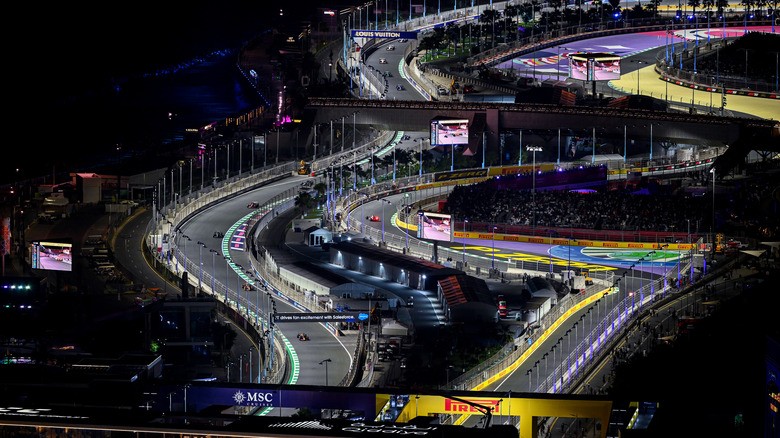
Moving back to newer additions to the calendar, the Jeddah Corniche Circuit was met with some backlash due to its potential safety risks, essentially taking on board all the features that make other street circuits dangerous into one package. It's the second-fastest track on the calendar, and also has the most corners. As you may be able to tell from these stats, the Saudi Arabian Grand Prix is one of the most relentless events in modern F1, particularly with how much downforce the current cars can produce. Coupled with its blistering corner speeds, drivers are almost constantly surrounded by concrete walls, also heading into plenty of blind corners.
While the runoff areas dotted around the track have assisted in keeping crashes from coming back on track, accidents such as Mick Schumacher's in 2022 show how much damage the close walls can cause at such high speeds. The walls have been widened in some areas to give drivers a little more breathing space, but the perilous nature of the street track remains well and truly present. Sergio Perez called it 'too dangerous without a real reason' as per Autosport, despite saying the track is still enjoyable to drive. Despite only being introduced in 2021, the planned Qiddiya Speed Park is set to replace the Corniche Circuit when it's complete.
Methodology
To rank the most dangerous F1 tracks, we looked at a combination of factors. Firstly, we looked at what drivers have said about how dangerous these tracks are, as well as how often drivers have accidents/how large the crashes are. We also looked at factors such as track layouts, including cornering speeds, wall/barrier proximity throughout the lap, and the amount of runoff areas.