

5 Things You Need To Stop Doing If You Drive An Electric Car
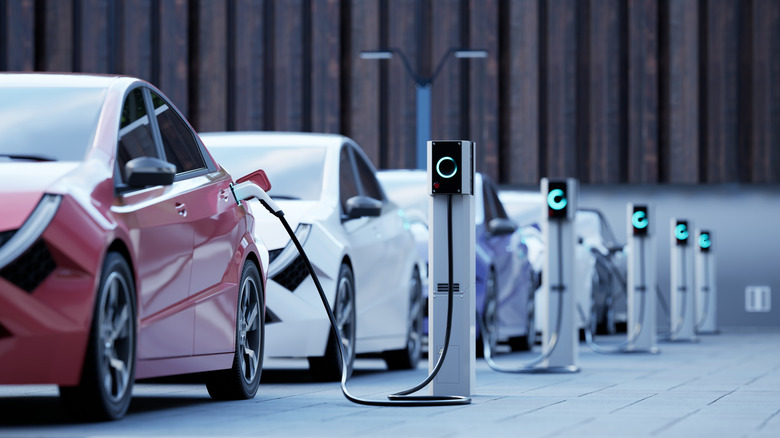
Electric vehicles (EVs) are rapidly gaining adoption worldwide, even though gas-powered cars still dominate the world. EVs arguably offer several benefits over traditional ICE vehicles, like instant torque, fewer emissions, and lower maintenance costs. Thanks to these reasons, I switched to an electric car a few years ago and haven't looked back since. While the transition from a gas-powered car to an EV was smooth, there definitely was a learning curve in terms of what to do and what not to do when driving an EV. If you think the only difference between the two types of vehicles is the presence of a motor instead of an engine, you're wrong. There are several nuances that you need to be aware of when transitioning from an ICE car to an EV.
Whether you're planning to switch to an EV or you already have one parked in your garage, we've compiled a list of things you need to stop doing immediately. While most of these tips help prevent issues with your vehicle, some of them can extend your EV's range or even the built-in battery's lifespan. By following these tips, you can also be sure of having a safer driving experience, especially if your EV has autonomous or self-driving features. Notably, all the points mentioned in this list apply to various types of EVs, from affordable models to flagship offerings, irrespective of the brand.
Charging the car to 100% every time
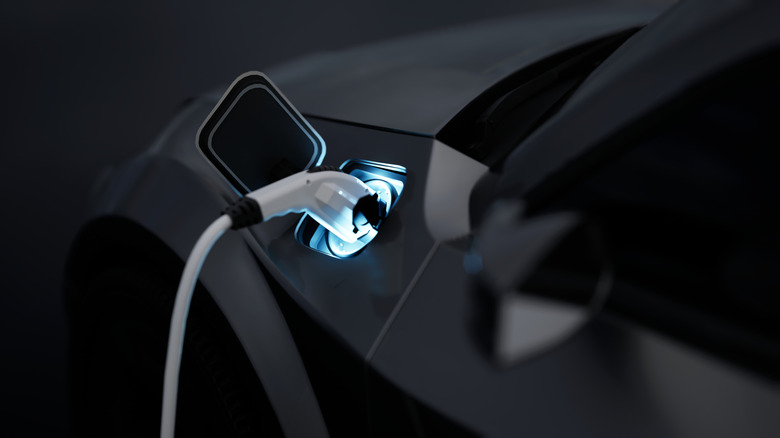
If you're transitioning from a gas-powered car to an EV, the obvious instinct is to follow the same procedure you used when filling up your tank. That is, fill it to the brim, since it saves you from making multiple visits to the gas station throughout the week. However, this isn't the ideal approach with electric vehicles. You might assume that charging your EV to 100% would give you the best range, making it the most sensible thing to do. While you do get a few extra miles by charging your car to 100%, you end up compromising the battery's longevity. Unless you're driving an EV with a lithium iron phosphate (LFP) battery, it's not advisable to charge it to 100% every single time.
That's not to say you should never charge your car fully. If you're headed on a road trip and want maximum range, it makes perfect sense to do so. However, if you mainly use your car for daily commuting or city driving, it's best to maintain the battery level between 20% and 80%. Following this habit can significantly improve your car's battery health in the long run and reduce degradation. Charging to 80% is also faster than waiting for the final 20%, which helps save both time and energy. Most new EVs include built-in settings to limit charging to a certain percentage, making it easier to maintain healthy EV charging habits.
Using DC fast chargers all the time
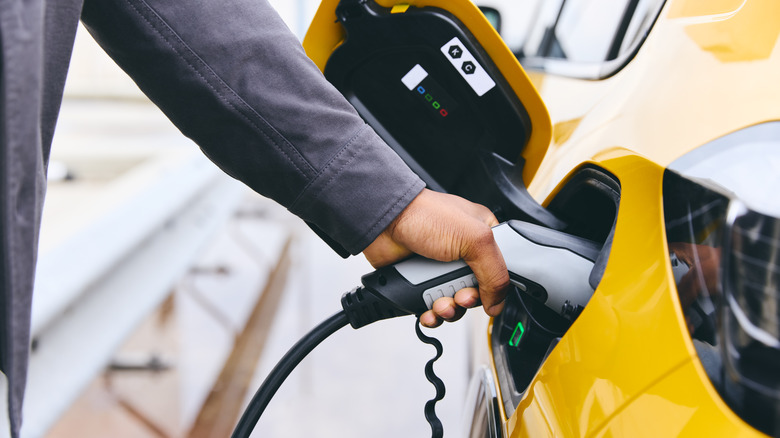
Just as charging your battery to 100% too often can affect long-term health, the same applies to charging it as quickly as possible every day. DC fast charging — while being an absolute godsend for EV drivers — isn't the preferred way to charge your car every single day. Thanks to the constant supply of direct current at high voltage straight to the battery, there's a lot of heat generated during the process. Despite having sophisticated tech and construction, a battery is, at the end of the day, a chemical device. Hence, repeated exposure to excess heat may lead to the lithium ions moving rapidly, reducing charge-holding capacity in the long run.
Owing to this, it's best to use DC fast chargers only when absolutely necessary. If you're on a road trip and need to recharge your car quickly while you stop for lunch, DC fast charging can be the difference between arriving on time and facing massive, hour-long delays. It's also useful if you're low on charge and need a quick boost just to get back home. Once you reach home, plug in your slow AC charger and let the battery replenish without stress. The point is — whenever you have time, charge your EV at a slower pace.
Ignoring wear on tires

Having driven a standard ICE car for years, it's understandable if you're not too bothered about checking the health of your tires every now and then. If you give them a simple glance and they look okay, you're probably fine for the next few thousand miles. Unfortunately, it doesn't work the same way with EVs. It's important to understand that electric vehicles, by nature, are considerably heavier than their ICE counterparts. This is primarily due to the presence of large battery packs placed underneath the vehicle. The extra weight puts pressure on the tires, leading them to wear out faster than you would expect. Of course, we're not saying that you'll have to replace your EV's tires every few months, but checking on them frequently can improve safety and save money.
Apart from the added weight, another factor that contributes to tire wear is the instant torque produced by EVs. If you often floor the accelerator pedal (which you shouldn't — more on that in a bit), the tread wears away sooner. While a worn-out tire is dangerous, other aspects of concern include a lower range due to an underinflated tire and the need to replace worn-out tires with ones specifically designed for EVs, since they're optimized for range, traction, and noise reduction. While you're at it, avoid tires with high rolling resistance.
Flooring the accelerator pedal
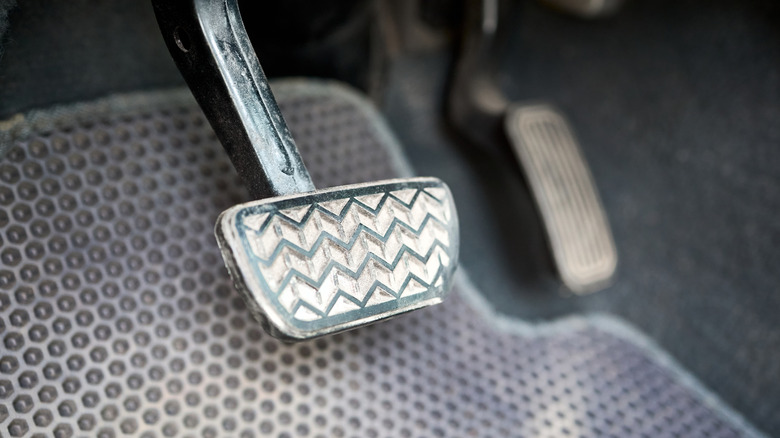
The first time I test-drove an EV, I experienced an adrenaline rush every time I pressed the accelerator pedal — all thanks to the instant torque. The thrill it gave me compared to my traditional gas car felt amazing! You would need a much more expensive and powerful ICE car to match the instant torque produced even by some of the most affordable electric cars. While the thrill is undeniably fun, it's not recommended to floor your EV's accelerator pedal constantly. While there's no direct impact on the safety or electronics inside the vehicle, pressing the accelerator hard all of a sudden leads to a large power draw, which drains the battery quickly.
Whenever you press the accelerator in an EV, the motor draws power from the battery to run faster. At cruising speeds, the power consumed is quite low. However, if you push hard and want to gain speed instantaneously, the power draw is disproportionately high. A direct impact of this can be felt on your car's range. If the manufacturer promises 300 miles, you may only get 200-220 miles if you constantly floor the accelerator pedal. As a result, you'll also have to charge your car more frequently, which can contribute to faster battery wear. Another side effect is that the tires may need replacement sooner due to tread wear from instant acceleration. In all, it's a good idea to accelerate smoothly to gain speed when driving an EV.
Ignoring software updates
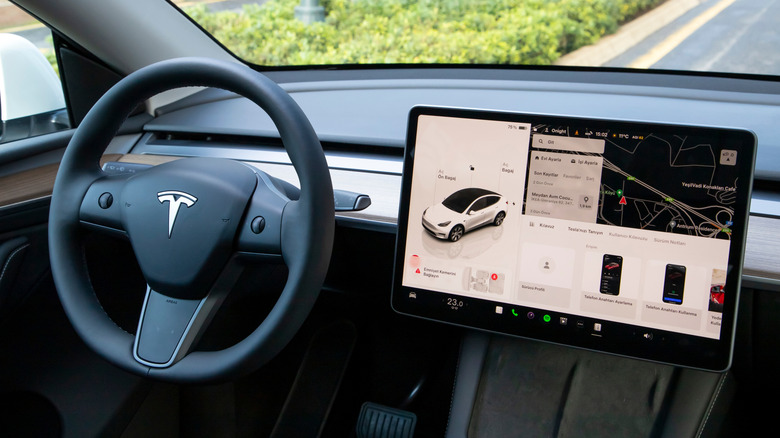
Cars these days are smarter than ever, and that's especially true for EVs. Several EVs have features such as advanced driver-assistance systems (ADAS), a central entertainment system, and electronically controlled functions like AC, parking brakes, etc. In fact, some cars like Teslas even have self-driving capabilities. All of these features depend on sophisticated software algorithms and optimization to work. But most software programs — like the operating systems on our phones or computers — contain bugs and issues that need constant fixing. Hence, car manufacturers continually monitor performance and roll out software updates. This is why it's vital to keep your EV updated to the latest software version at all times. If there are critical bugs or issues with a car's firmware, an update is the only way to patch them.
Apart from that, EVs have complex battery management systems (BMS) in place to ensure the battery functions smoothly and the car manages charging and discharging efficiently. Some brands may release updates to improve the BMS and unlock more range, while also improving factors such as charging temperatures when the car is plugged into a DC charger. These updates are crucial for both safety and battery longevity. So, frequently check for updates via the car's infotainment console, and install any available version through the screen. You can also enable auto-updates to automatically keep your car up to date whenever a new software or firmware version is released.