

The Cheap Toyota I'd Probably Pick If I Wanted A New Car On A Budget
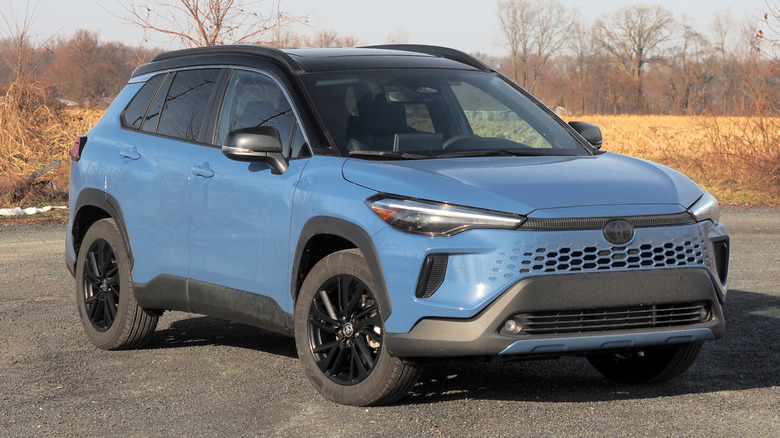
Excitement is not in the budget, for a lot of new car buyers right now. The thrill of a big and vocal engine, or high horsepower, or being on the cutting-edge of electrification is a luxury that can, and must, play second-fiddle to reliable, frugal, (relatively) affordable transportation. And it's with that framing that I think the 2026 Toyota Corolla Cross Hybrid genuinely shines.
Should it be a hatchback? Sure, but crossovers sell much better, and so it's a crossover. Should it be fully electric? Maybe, but full EVs are more expensive and still provoke skepticism, so it's a gas-electric hybrid. Should it be a plug-in hybrid? Perhaps, but that'd need a bigger (and costlier) battery, and is everyone really going to plug it in, or even have the facility to?
 Chris Davies/SlashGear
Toyota took the drivetrain technology it knows so well, combined it with what it also knows is in high demand, and gave it a starting price under $30k (admittedly without the mandatory $1,450 destination fee, which takes the cheapest 2026 Corolla Cross Hybrid S to $30,745). Even this top-spec Hybrid XSE trim (from $34,780 including destination) with the Convenience Package ($1,250), JBL audio upgrade ($800), and two-tone paint ($500) is still only $37,120 all-in.
The two big reasons to go hybrid
That leaves it well under the average price people are paying for a new car bought in the U.S., though nowhere near the cheapest Corolla Cross. Sacrifice the hybrid drivetrain, after all, and the base L trim kicks off at $26,385 (including destination). I can well understand that sub-$30k appeal, but I'd warn those interested that there are two main compromises involved in going for that budget strategy, however: economy and all-wheel drive.
The non-hybrid Corolla Cross is rated at 31 mpg in the city, 33 mpg on the highway, and 32 mpg combined, when in its default front-wheel drive form. That dips to 29 mpg city, 31 mpg highway, and 30 mpg combined if you go for the all-wheel drive option, which costs an extra $1,300.
 Chris Davies/SlashGear
The Corolla Cross Hybrid, meanwhile, is AWD as standard. It's rated for 46 mpg in the city, 39 mpg on the highway, and 42 mpg combined. According to the EPA's fuel cost calculator, that'll mean saving about 30% on gasoline, annually, versus the non-hybrid AWD model.
Practical, but hardly memorable
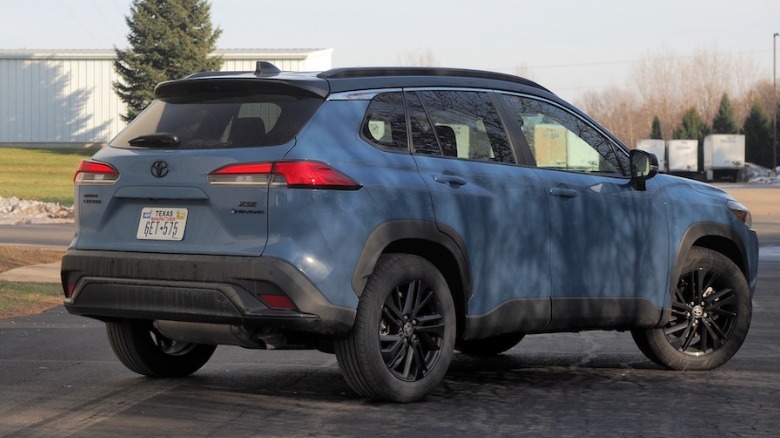
Nobody will describe the Corolla Cross as especially memorable in its design. It is compact and inoffensive, akin almost to the generic SUVs that are designed for insurance commercials to avoid trademark infringement. The hybrid thankfully escapes the grumpy grille of the non-electrified version, and I do appreciate Toyota's array of two-tone finishes with their contrasting roof. You'll need to buy the most expensive Hybrid SE or Hybrid XSE trims to spec them, mind.
 Chris Davies/SlashGear
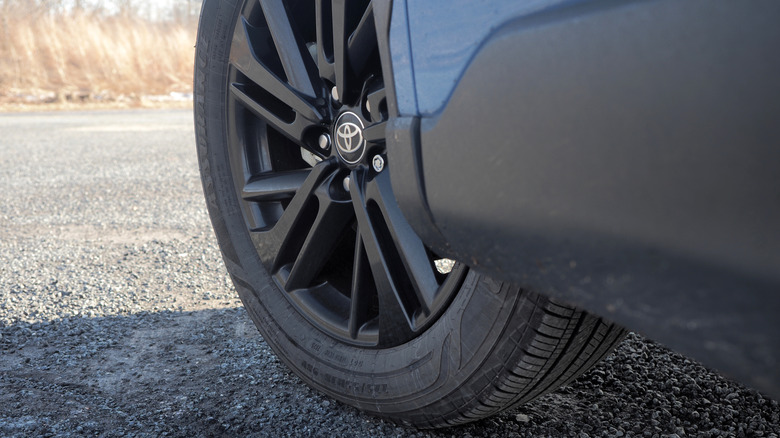
Lesser trims get 17-inch wheels — the base L even has steel rims, with plastic covers! — with upper trims getting 18-inch wheels. The non-hybrid has 8.1-inches of ground clearance, versus 8-inches on the hybrid. No, I don't think anybody is going to brave the wilderness in their Corolla Cross, but I appreciated that height in snowy, poorly-plowed parking lots.
 Chris Davies/SlashGear
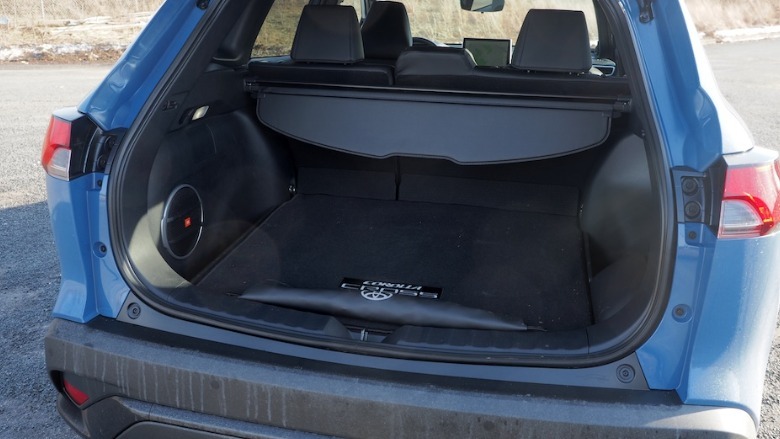
Pop the trunk — powered, with the $1,250 Convenience Package available only on the XSE, and which also includes a glass moonroof — and there's 21.5 cu-ft of space, expanding to 52 cu-ft with the 60/40 split rear bench folded down. Both hybrid and non-hybrid Corolla Cross have a 1,500 pound towing capacity.
Not powerful, but perky where it counts
All Corolla Cross models get Toyota's 2.0-liter inline-four gas engine. It's tuned for 169 horsepower (at 6,600 rpm) in the non-hybrid, and 150 hp (at 6,000 rpm) in the hybrid. However, the addition of three electric motors — one dedicated to the rear wheels — nudges total system power up to 196 hp. Either way, a continuously variable transmission (CVT) is standard.
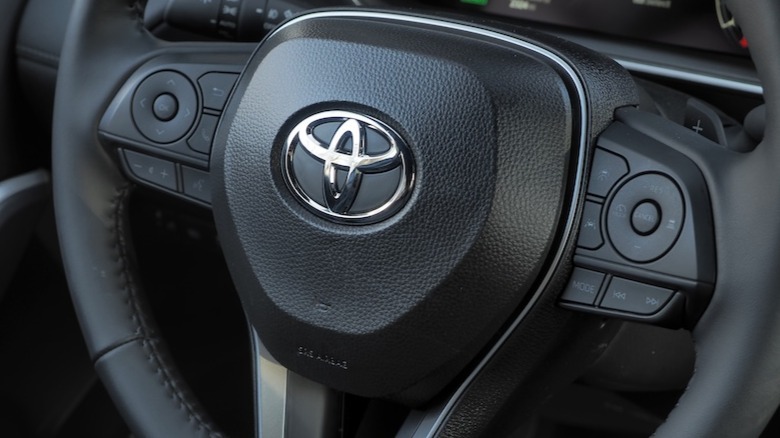
I'm generally a fan of Toyota's hybrids, but it'd be a bold faced lie to describe the Corolla Cross Hybrid as a performance vehicle. Toyota estimates an 8-second 0-60 mph time, and — as is so often the way with gas-electric drivetrains — you get there with a lot of groan, whine, and grumble from the combustion half. All the same, it's a reminder of why power figures alone are only part of the story.
 Chris Davies/SlashGear
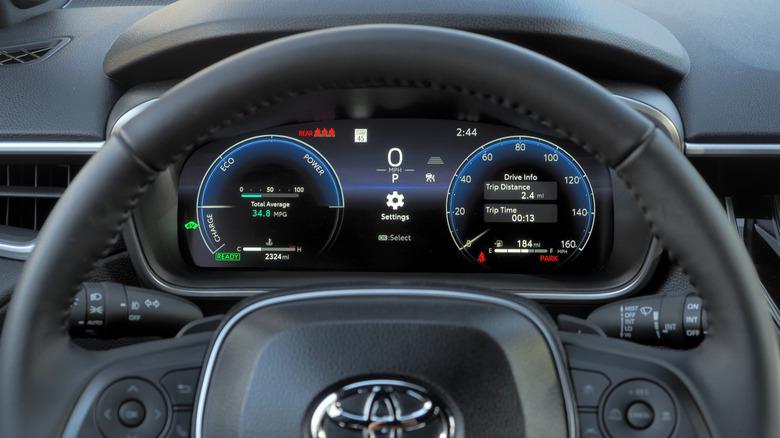
The electric motors may not be huge, and neither is Toyota's battery, but their contribution before the inline-four has been fully roused makes this a perky little imp around town. It zips and darts, belying the on-paper numbers. There's a Sport mode, but it mainly seems to make things louder; similarly, Eco mode dulls things to a ponderous level. With my mixed driving — and no consideration whatsoever given to economy — the Corolla Cross Hybrid landed at almost 35 mpg. In our recent review, in less wintery conditions, it passed 39 mpg.
A dashboard that's not afraid of physical controls
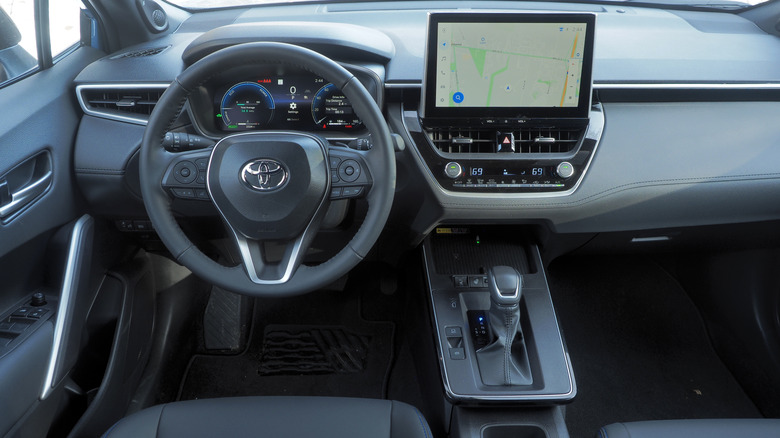
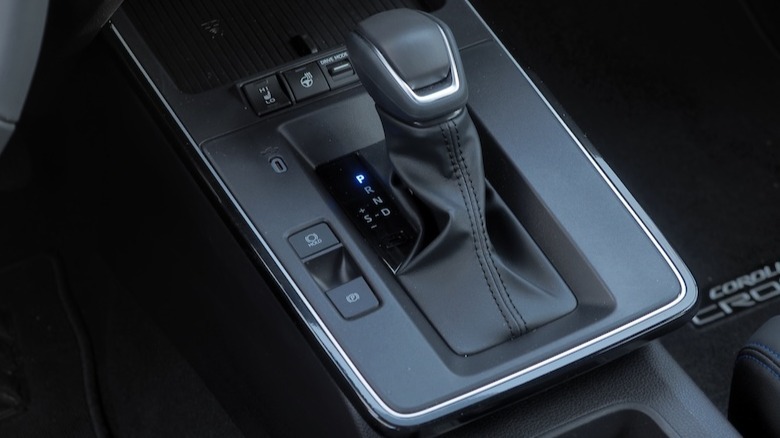
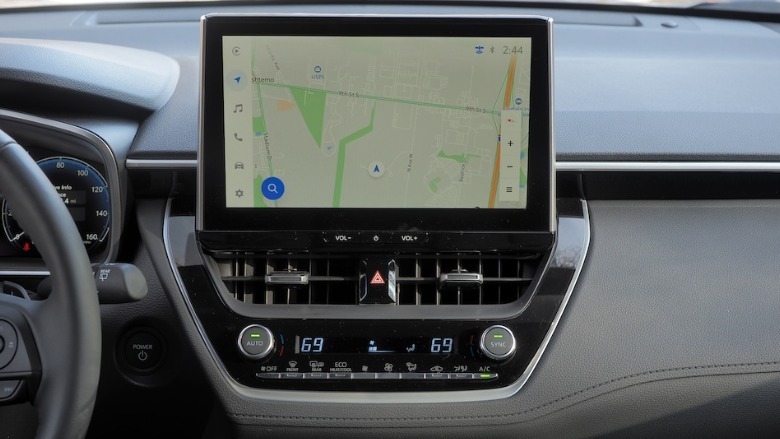
It's not a lavish cabin, but a sturdy one. Toyota's infotainment touchscreen looks small, compared to what rivals offer, but it arguably makes up for that with plenty of physical buttons. The HVAC has easily-twiddled knobs; the heated front seats and heated steering wheel that are standard on the XSE (and a $500 Cold Weather Package option on the SE) not only get switches and buttons, but latching ones that so they stay on even if you power cycle the car. Tedious, then, that the useful brake-hold feature demands you re-enable it every time.
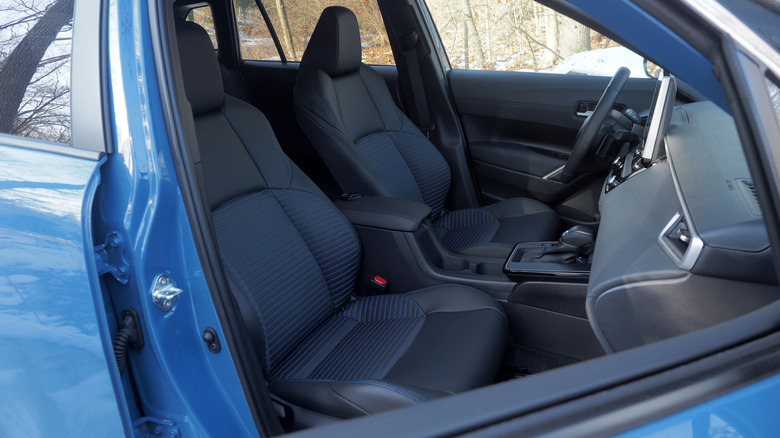
All hybrid models get a digital gauge cluster — 7-inches on the S and SE; 12.3-inches on the XSE — and an 8-inch center touchscreen running Toyota's capable (and wireless Android Auto/Apple CarPlay supporting) infotainment system. The SE adds a wireless phone charging pad and two rear USB-C charging ports to the S' two up front. The XSE has power adjustment for the driver's seat, dual-zone climate control, ambient lighting, and SofTex seats instead of regular cloth.
 Chris Davies/SlashGear
Toyota Safety Sense 3.0 is standard across the board: it includes adaptive cruise control; lane-departure alerts with steering assistance; pre-collision avoidance with pedestrian detection; lane-tracing assist; and auto high-beams. Hybrid SE trim and above add blind-spot warnings with rear cross-traffic alert; the Hybrid XSE gets front and rear parking sensors, with automatic braking. A backup camera is standard, of course, but there's no 360-degree camera option.
Direct rivals are hard to find

Exact rivals to the Corolla Cross Hybrid are in relatively short supply. Kia's Niro Hybrid and Niro Plug-In Hybrid have more cabin technology, but lack the all-wheel drive; their Hyundai Kona cousin has the AWD but no hybrid. Both, though, do come in fully-electric form. Honda's HR-V has the AWD, but no hybrid option in the U.S. currently; the same goes for Mazda's CX-30.
Subaru's recently released Crosstrek Hybrid is the most obvious competitor; in fact, it's almost identical in size to the Toyota. The Subaru has a mechanical all-wheel drive system, rather than relying on an electric motor for the rear axle as on the Toyota, but lags on economy with its 36 mpg combined EPA rating.
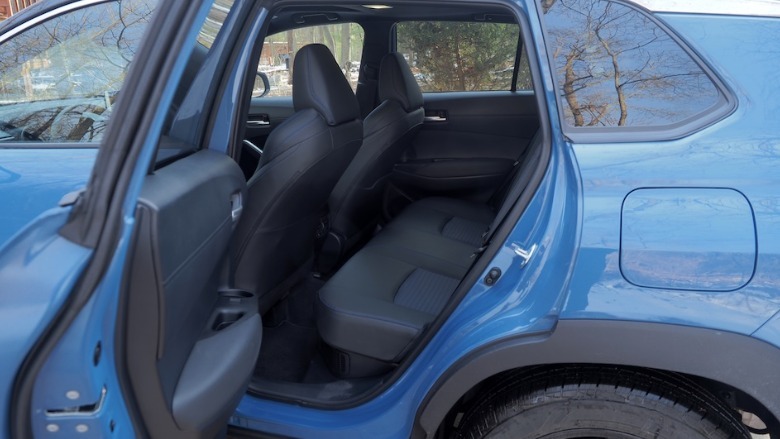
Front cabin headroom and legroom are similar; Toyota gives you a little more rear headroom, Subaru more rear legroom (but, at 19.9 cu-ft, less trunk space with all the seats up). If I was genuinely planning to head out on the trails, I'd probably opt for the Crosstrek Hybrid, but it's worth noting that the cheapest version is $35,415 including destination, or $4,670 more than the cheapest Corolla Cross Hybrid.
2026 Toyota Corolla Cross Hybrid verdict
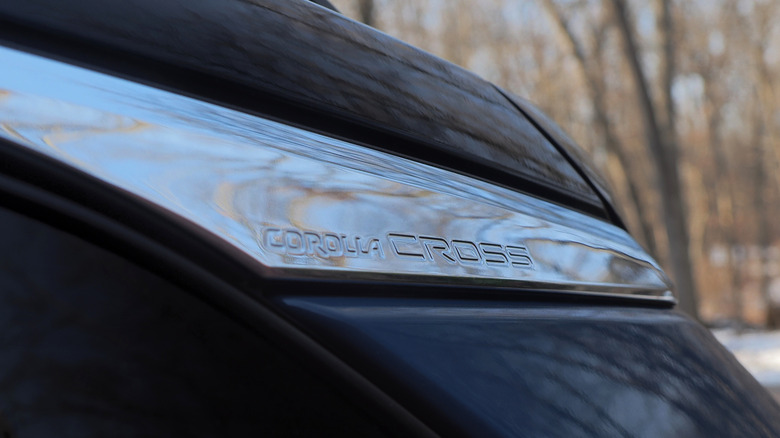
I won't lie and tell you that the 2026 Corolla Cross Hybrid is particularly fun, nor entertaining to drive. Its design is unmemorable, its cabin built with sturdy-on-a-budget in mind, and — like a lot of hybrids, and Toyota hybrids in particular — it doesn't sound all that pleasant when pushed.
At the same time, though, it's (relatively) affordable, can be impressively frugal, has plenty of safety features, and Toyota backs it up with a 36 month / 36,000 basic warranty, a 60 month / 60,000 mile powertrain warranty, a 96 month / 100,000 mile hybrid system warranty, and a 120 month / 150,000 mile hybrid battery warranty. Oh, and scheduled maintenance for the first two years or 25,000 miles.
The Toyota Prius also combines frugality and warranty reassurance, but it's down on overall storage space and I know a lot of people now insist on the loftier driving position of a crossover. Or there's the RAV4 Hybrid, with more space in the second row and trunk than the Corolla Cross Hybrid (though, unexpectedly, slightly less front legroom) but a bigger price tag if you want to match the toys.
From $32,065 including destination, the 2026 Corolla Cross Hybrid SE arguably strikes the best balance between price and creature comforts: adequate where it needs to be, and reassuring where it most counts. As "head versus heart" decisions go, then, I suspect this one hardly needs spelling out.