

TSA Is Expanding PreCheck System To Make The Process Smoother For Most Travelers
Just when you probably got the hang of the last round of changes to TSA, the Transportation Security Administration is about to switch things up again. Starting in spring of 2026, the agency is rolling out new steps for its TSA PreCheck Touchless ID program (not to be confused with Clear or Global Entry.) Big picture, this one single change has the potential to impact millions of travelers across dozens of airports nationwide and for some, it might not be the most positive impact, either.
The plans revolve around TSA's facial-comparison-based system, which they'll be expanding to 65 locations as part of a larger push to streamline identity verification at airport security checkpoints. As a note, the expansion will only apply to people already enrolled in TSA PreCheck and flying Alaska Airlines, American Airlines, Delta Air Lines, Southwest Airlines, and United Airlines out of one of those 65 airports. Just as a small sample: Atlanta, Los Angeles, Chicago, New York-area airports, Seattle, San Francisco, and the list goes on.
How the system works and why it's controversial
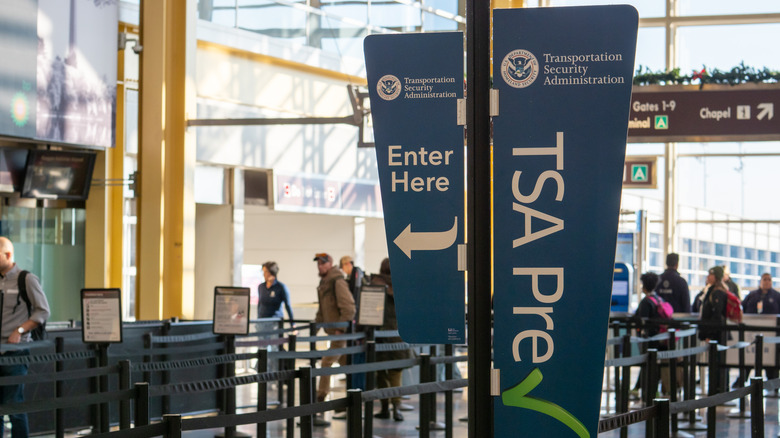
If you've never seen this Touchless ID system before, it lets passengers verify their identity with a live photo instead of presenting a physical ID at the checkpoint. Travelers who opt in and meet the requirements get to go through special TSA PreCheck Touchless ID lanes where biometric cameras compare their picture to their passport information already on file with the airline.
To take part in the expanding program yourself, you have to have a valid passport uploaded to your airline profile, an active TSA PreCheck membership, and be opted in through your airline app, account, or during check-in. A Touchless ID indicator also has to show on your mobile boarding pass to access the special dedicated lane. What's more, you still need a physical Real ID on hand as backup. TSA shouldn't assume everyone wants to participate, though. As with anything having to do with biometric data, there are some valid privacy concerns about the expansion.
TSA insists that the images taken during the Touchless ID process aren't given to law enforcement, immigration enforcement, or any other entities for surveillance purposes. Under standard conditions, the biometric data gets deleted less than 24 hours after it's taken. TSA officials also stress that the technology is not used to profile passengers and that officers are trained to treat all travelers with dignity and respect. Still, a person can't be blamed for wondering how safe their data really is in TSA's hands.