

What Makes America's New Prototype M1E3 Abrams Tank So Special?
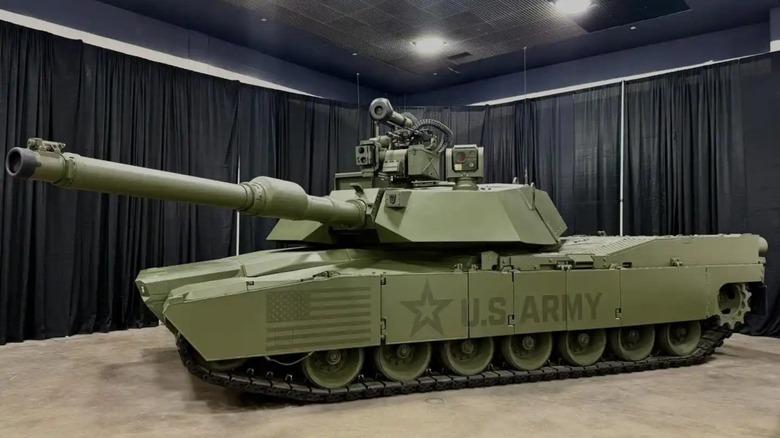
One of the most prominent recent examples of threats on the battlefield, of course, is the drone. Cheap military drones have become the scourge of multi-million dollar tanks, sneaking their way through gaps in armor and being able to strike weaker spots while being elusive enough to avoid countermeasures. The threats to tanks are very real and growing, but the latest U.S. prototype model, the M1E3 Abrams, proves that tanks are preparing to meet the dangers of 2026 and beyond.
It seems that the military has decided that the route to doing so is to make the model stealthier, lighter (around 60 tons) and more difficult to target, while remaining as powerful and practical as ever and boasting a more efficient hybrid power system.
With military technology, it's often the case that plans in progress get canceled, resources are allocated elsewhere, or evolve into something new as the situation and the associated technology evolves. This has happened with a lot of long-lasting military technology, and especially so with tanks. The Abrams tank was created by Chrysler Defense and first fielded in 1980, a main battle tank of the third generation. Times have changed, though, and the M1E3 is set to be a fifth generation model and a rather different beast. Let's take a closer look at the features the new M1E3 will offer, when it's scheduled to hit the battlefield, and how it will diverge from the models that came before.
A new focus for a new generation of tanks
If the focus on shielding and defenses is taken too far, there's the danger of becoming like the infamous Object 279, a Soviet tank that was ultimately too heavy to build. The Abrams was similarly designed to be a powerhouse, but now the tides are turning, as tanks are becoming more vulnerable.
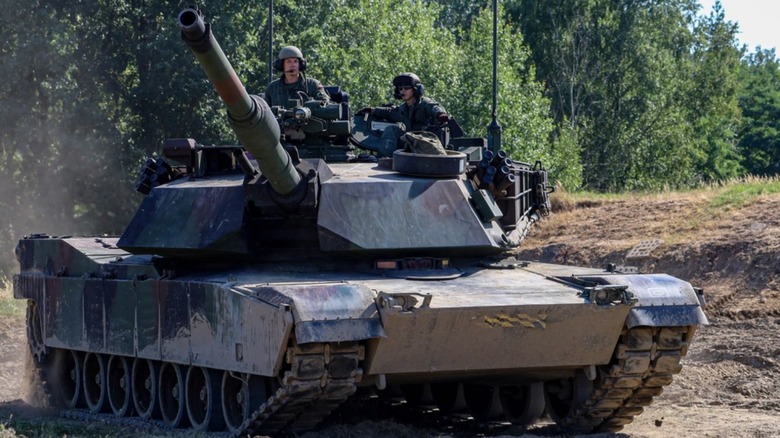
In response, the M1E3 is intended to become that most curious of weapons: A tank with a lower profile (the drivetrain will make it less visible to radar and quieter) that doesn't compromise on its firepower. Its main gun, according to early reports, is akin to the smoothbore M256 equipped on the M1A2 (pictured above), but there are some prominent differences. The Global Defense News Army Recognition Group reports that the turret lacks an access point, suggesting the use of an autoloader rather than requiring a crew member to load. As such, the four-person crew of the M1A2 may become a trio.
It's also set to have a more sophisticated Active Protection System and a more modular design incorporating tools such as GenAI, making future hardware and software upgrades easier to deploy. It's also aimed at managing some historical weaknesses of the Abrams, one of which has been its fuel use. M1 Abrams have used gas turbines over diesel engines, which has caused compatibility issues when they have been used alongside other armored vehicles. There's also the fact that, though they can use diesel, they voraciously guzzle a lot of it. A priority with the new M1E3 is efficiency, which will be boosted by approximately 50% by the addition of an electric hybrid engine.
Other new additions and a potential ETA for the model
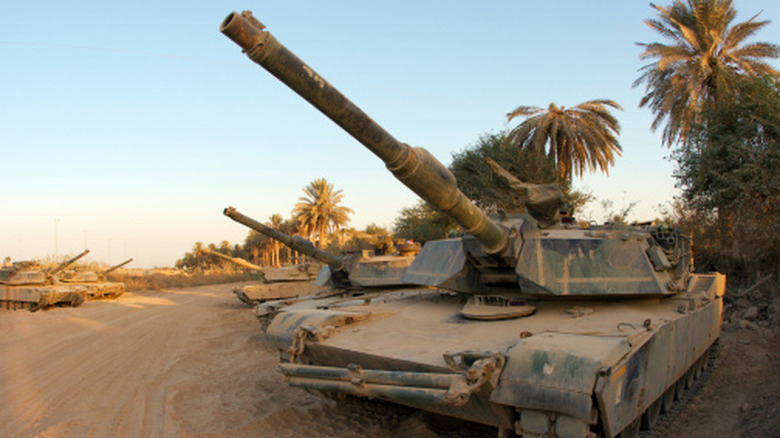
Something else makes the M1E3 prototype special, and it's simply the fact that it's on course (as of the time of writing) to be delivered several years ahead of schedule. It was initially estimated that prototype M1E3 models would be starting to roll out in 2030, but in September 2025, General Randy George announced that the timeline had been revised. Defense Daily reports that the general stated at a conference in Georgia, "I'm here to tell you, we will have four of those new tanks next year [2026] as prototypes inside of our formation."
Being prototypes, of course, it's not currently possible to determine the exact functionality and specs that the finished models will have, but the key areas of focus for improvement have been clear for some time. In April 2025, chief technology officer Dr. Alex Miller reported to Defense News that "the things we really want to get after are, 'Hey, what's happened in the last 40 years for drivetrain? What's happened in the last 40 years for power generation?'"
The rise of the hybrid happened in that timeframe, so it makes perfect sense that the new tank's creators would choose to pursue a hybrid powertrain. The hybrid approach is lessens emissions while still not leaving the vehicle entirely dependent on electrical power, which is sure to be a solid fit for this very different type of vehicle too. The next chapter of the storied Abrams family is being written.