

Every Toyota Crown Generation Ranked Worst To Best
In 1911, Japanese businessman Sakichi Toyoda founded the Toyoda Automatic Loom Works, Ltd. Following its success, Toyoda funded an automotive development program at his new company, led by his son, Kiichiro. Then, in 1937, a year after Toyota's first car was produced, the Toyota Motor Company was founded, marking the genesis of what would become one of the most successful automakers not only in Japan, but in the world.
Over Toyota's 89-year history, it has produced a broad palette of models from the entry-level Corolla to the legendary Land Cruiser. As with any automaker, there is a hierarchy among Toyota's models, and near the top is the Toyota Crown. The Crown is the brand's long-standing halo car, designed to showcase the best of what Toyota offers. Since its introduction in 1955, it has spanned 16 generations. Here is every Toyota Crown generation ranked from worst to best.
16. Crown S200 (13th Generation)
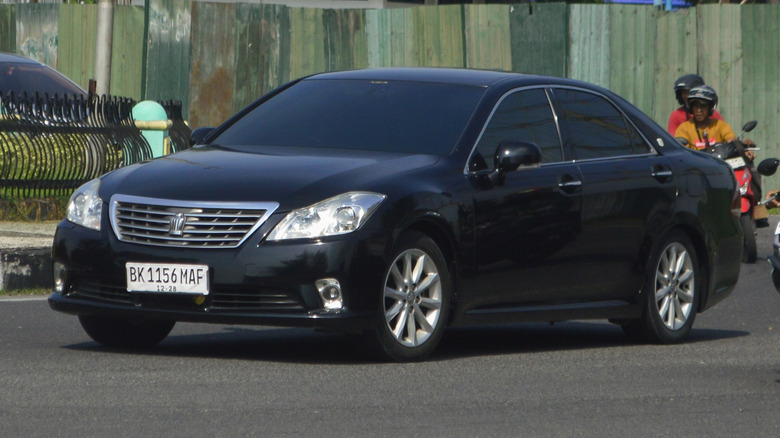
Introduced in 2008, the S200 Crown was new, but it didn't change much visually from the outgoing model. It wasn't an abhorrently ugly car, but it wasn't the most exciting either. The S200 Crown looked a bit like a grown-up Nissan Sentra. Its proportions were long and executive, and the front sported a pair of nondescript headlights that looked like they could have been placed on any Japanese sedan at the time. Again, not ugly, but a bit unremarkable.
Inside, the Crown boasted a new LCD screen, and under the hood was the V6 3GR-FSE (the same one found in the day's Lexus IS350 and GS350) for the base model, and a 4.5-liter V8 in the range-capping Crown Majesta. Beyond these new powertrains and some minor visual changes, the S200 felt more like a facelift than a rebirth for the brand's halo car.
15. Crown S140 (9th Generation)
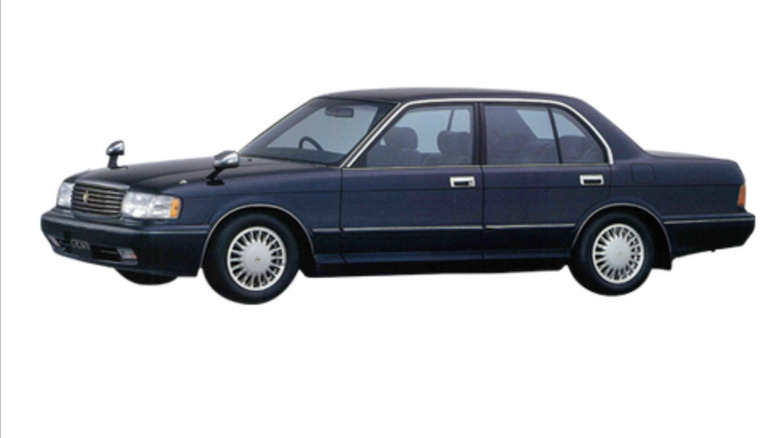
In 1991 came the Crown S140. For this new model year, Toyota decided to narrow the body style options and offered only the S140 in a hardtop variant. Within the hardtop body style, the 9th generation Crown came in two sizes called the "Number 5" and "Number 3" in which the latter was larger, but both focused on an increase in interior space.
In 1991, the Majesta trim was introduced as well. Complete with a V8, the Majesta replaced the top-of-the-line Royal Saloon trim of the previous generation. On the topic of engines, the mid-level Royal Touring trim came with the legendary 2JZ, though here its power was more required to move the Crown's heavy weight. Overall, the S140 was solid, but didn't do much to further the Crown nameplate.
14. Crown S210 (14th Generation)
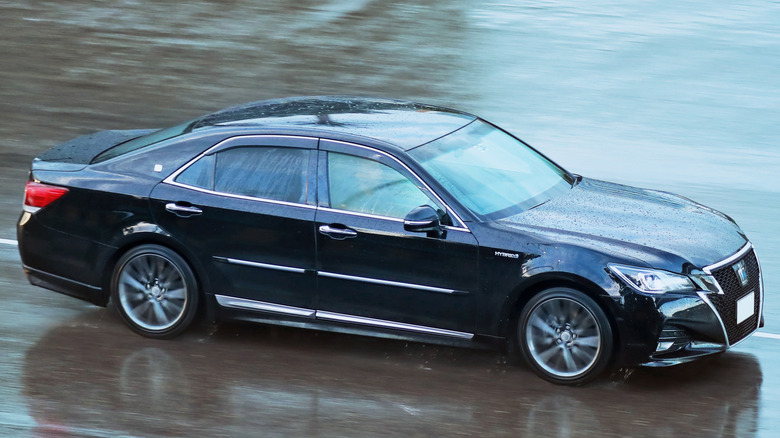
When the 14th-generation Crown came out in 2012, it looked like a whole new car. The exterior had been completely redesigned, and the new S210 debuted with a much more consequential look than its predecessor. The front grille was enlarged, now spreading from the top to the bottom of the front fascia. The headlights were sharpened as well, and athletic creases were added across the body, making the S210 feel like a more authoritative Crown than previously.
However, under the new skin, the internals were almost entirely borrowed from the previous generation. Beyond some new safety tech such as adaptive headlights, a sonar system, and a pre-collision system, The chassis was unchanged, and the engine lineup was shrunk, with Toyota only offering a 2.5 and 3.5 liter V6. The new safety tech was impressive, but overall, the S210 felt like an underwhelming next step.
13. Crown S180 (12th Generation)
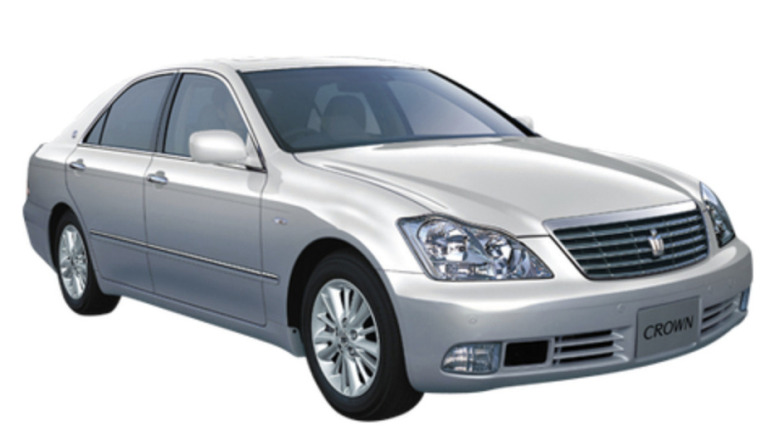
Introduced in 2003, the Crown S180 brought several changes and new technologies to the 12th generation of Toyota's range-topping sedan. The new body of the S180 was bigger with an extended wheelbase. Impressively, this growth came with no weight penalties, though, as the S180 was lighter than the outgoing generation. The exterior design was fully revamped, and smoothed out the squarer proportions and lines of the previous generation.
Under the hood, the S180 came bearing the new 3GR and 4GR V6 variants, which replaced the outgoing model's inline six. The S180 carried over its double wishbone suspension from its predecessor, although it added a new multi-link system for the rear wheels. The steering system also evolved, shifting from hydraulic to electronic power steering. The S180 was the Crown's first major 21st-century adaptation as Toyota sought to modernize the nameplate.
12. Crown S170 (11th Generation)
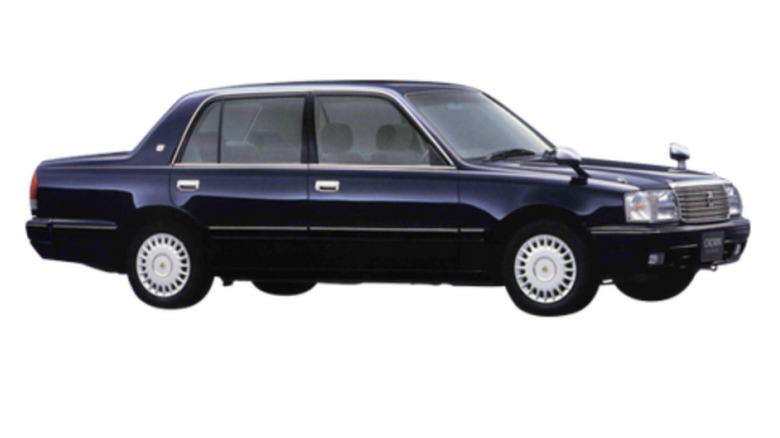
The S180's precursor, the S170, was released in 1999. While the S180 was aimed at individual consumers, the S170 Crown Sedan had its sights set on corporate transportation, hoping to serve as a limo for VIPs of all sorts. The sedan's exterior styling reflected this, looking like a well-dressed taxi, not in a bad way. The Sedan also debuted a hybrid powertrain in its 2002 Super Deluxe trim, but the bulk of new technologies came in the consumer-focused Crown Majesta trim.
The Majesta had a new presence as its ride height and interior space were both increased for the S170 generation. It also hosted a handful of new technologies, which were quite impressive for the time, such as its rear-wheel steering system and its complex, electronic double wishbone suspension. The S170 was impressive, but its focus on the limo sector strayed from its purpose of showing the average consumer what a Toyota could be.
11. 2023 Crown (16th Generation)
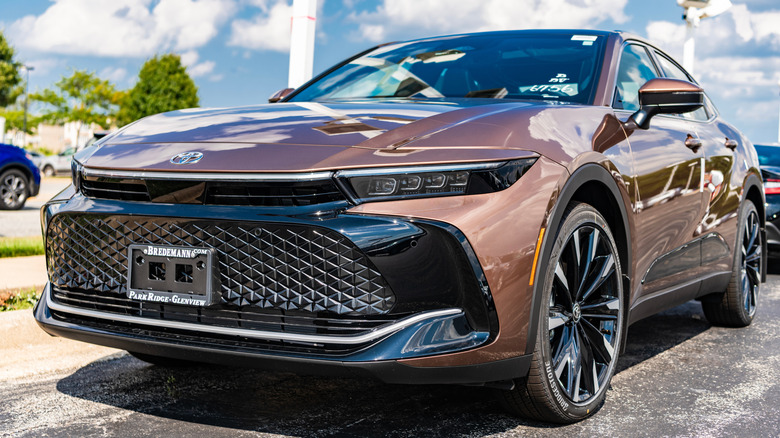
The newest edition of the Crown debuted in 2023, with everything entirely brand new. On the outside, the Crown certainly looks different from other modern Toyotas, with optional two-tone paint and a body that falls somewhere between a sedan, a crossover, and a hatchback. The 16th-generation Crown range is powered entirely by hybrid powertrains and comes standard with all-wheel drive. Inside, the new Crown takes Toyota's pleasantly utilitarian modern design language into slightly more hedonistic territory, with lots of leather and more thoughtful lines.
Everything about the new Crown is satisfactory, but its starting price of $41,440 places it in a strange spot. Before the 16th generation hit American shores, the Crown hadn't sold in the U.S. since 1960, and though the Toyota name has become revered in the states, it wasn't regarded as a luxury brand. An unfamiliar nameplate that can reach prices of over $50,000 might turn off American consumers, and though the Crown has done nothing wrong, it's simply too early in its North American lifecycle to confidently assess its position in the model's history.
10. Crown S120 (7th Generation)
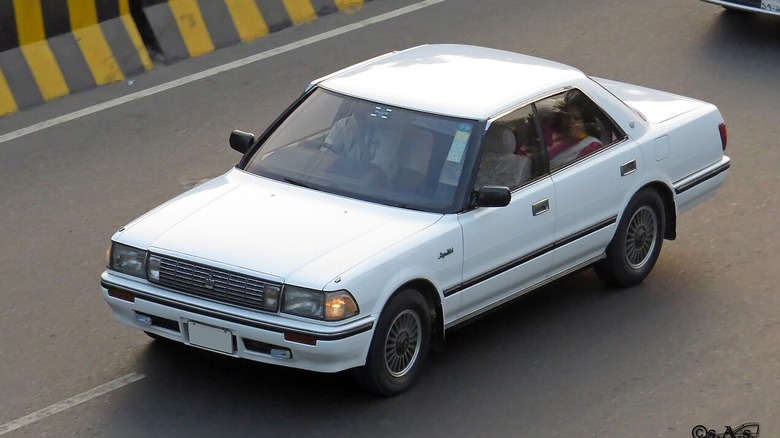
The seventh-generation Crown debuted in 1983 and brought the nameplate to its peak in the '80s. The S120 Crown did every period design cliche the right way, and though it is very clearly a car of that time, it manages to retain a timeless feel. One new design element was what Toyota called the "crystal pillars." These crystal pillars referred to the shiny, resin-coated C-pillars on the Crown, which accentuated the car's silhouette.
On the topic of shiny things, the S120 also debuted a two-tier glass roof, with glass panels over the front and rear passenger areas, making the interior abundant with light. The S120 came with a range of engine options, from a 2.8-liter straight-six to a 2.4-liter turbocharged diesel, and, in 1985, the gasoline engines received superchargers, making them the first supercharged engines Toyota ever sold.
9. Crown S130 (8th Generation)
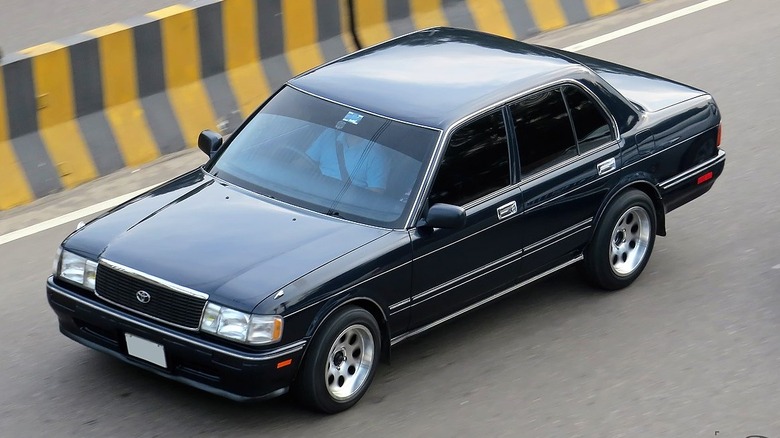
Coming to market in 1987, the eighth-generation Crown took everything that was good about the S120, improved upon it, and added some impressive new innovations. The S130's design was a more polished version of its predecessor, retaining its proportions while modernizing elements like the headlights and taillights. Its skeleton remained a perimeter chassis, and it kept the outgoing model's double wishbone suspension.
The S130 offered a range of engine options, including the typical sedan and a hearse-like wagon. The 3.0-liter straight-six model, in particular, featured an electronically controlled air suspension, and the S130 set the trend of traction control becoming a standard option for future Crown models. For the high-end Royal Saloon trim, Toyota debuted the world's first CD-ROM navigation system that could display map data via CDs on a bulky, but impressive for its time, CRT color display.
8. Crown S80/S100 (5th Generation)
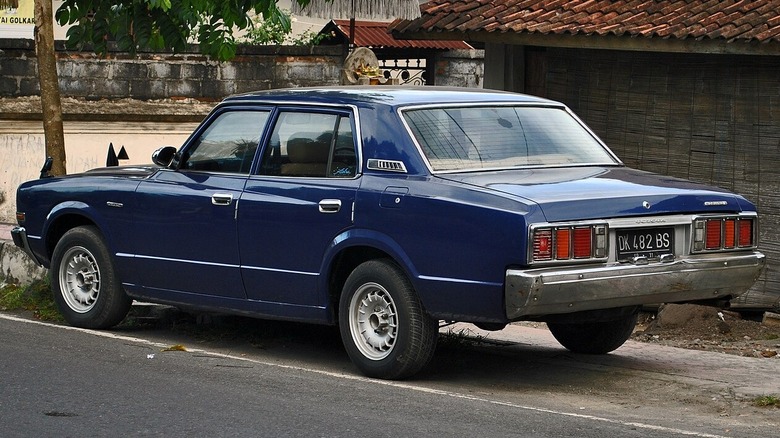
The S120's grandfather, the fifth-generation Crown, debuted in 1974 with a myriad of new technologies that would help advance the nameplate. The previous generation had experimented a bit too much with smoother styling for most consumers' tastes, and the S80 marked a return to the more stately look for which the Crown was appreciated. Along with that ploy to win back the consumer, Toyota introduced a four-door hardtop that combined handsome looks with practical space.
However, most of the S80's achievements were under the skin. Toyota kept it simple, offering only six-cylinder engines, along with a new ECU that pushed improvements across the board from power output to efficiency. For the 1977 model year, the Crown debuted Toyota's first diesel engine in a passenger car, a 2.2-liter four-cylinder. Perhaps its chief improvement, though, was the introduction of four-wheel disc brakes, a technology now standard in the car industry.
7. Crown S110 (6th Generation)
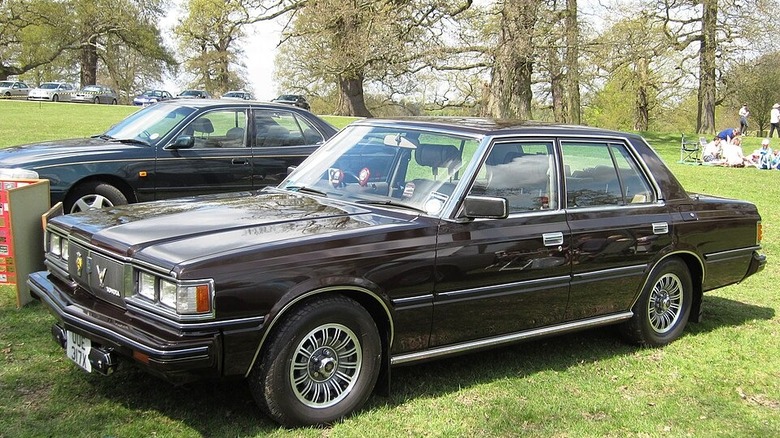
Introduced in 1979, the sixth-generation Crown had the difficult task of remaining a luxurious halo car while also becoming more efficient than ever before. The S110 received a new, larger 2.8-liter straight-six engine that was more fuel-efficient than its predecessor despite the increase in displacement. The S110 was also lighter than its predecessor and refined its design language, adding new features such as thin B-pillars that were almost invisible when both windows were rolled up.
The S110 pioneered early computer technologies, as it introduced an advanced cruise control system powered by a microprocessor, complete with displays that informed the driver of trip durations and an estimated time of arrival. On the less geeky side of the tech was the optional in-cabin refrigerator, a true necessity for any indulgent luxury car.
6. Crown S220 (15th Generation)
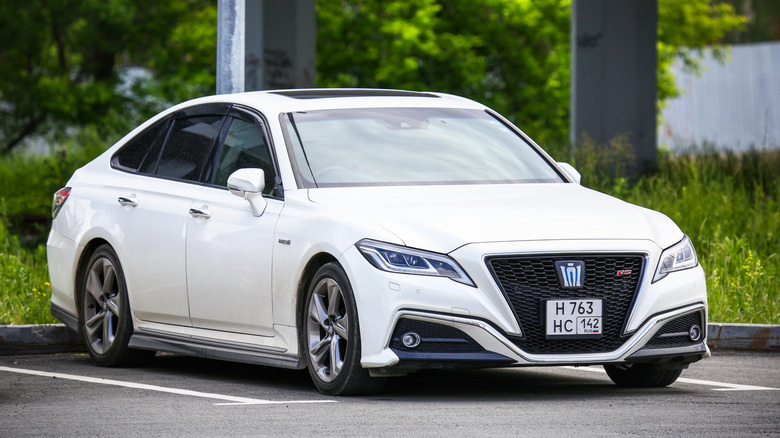
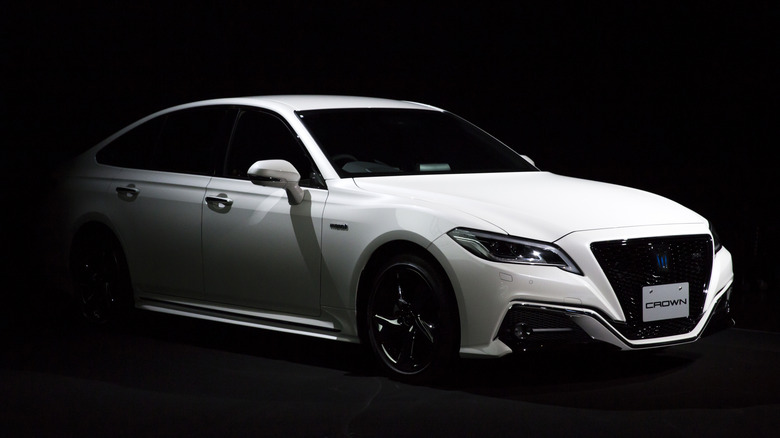
The S220 was the last Crown Toyota produced before its bottom-up redesign and refresh in 2023. It represents the final phase of the modern Crown's evolution, as it was known throughout the 2000s, making it a special car and a recent example of Toyota's vision for the modern Crown nameplate. The 15th-generation Crown was one of the sportier entries in the series, with development guided by track time at the Nürburgring, resulting in a top-model hybrid V6 delivering 360 horsepower.
Toyota evolved the modern Crown design into a balanced, sporty, and sophisticated look, with the proportions of a super sedan. The S220 came standard with an onboard data communication module (DCM), which helped connect the car to external networks, and supported a variety of services such as smartphone accessible engine diagnostics, smart maintenance alerts, accident operator services, and more. Structurally, the S220 featured more sound-deadening materials and a lower drivetrain supplemented by aluminum parts to make for a lower center of gravity.
5. Crown S60/S70 (4th Generation)
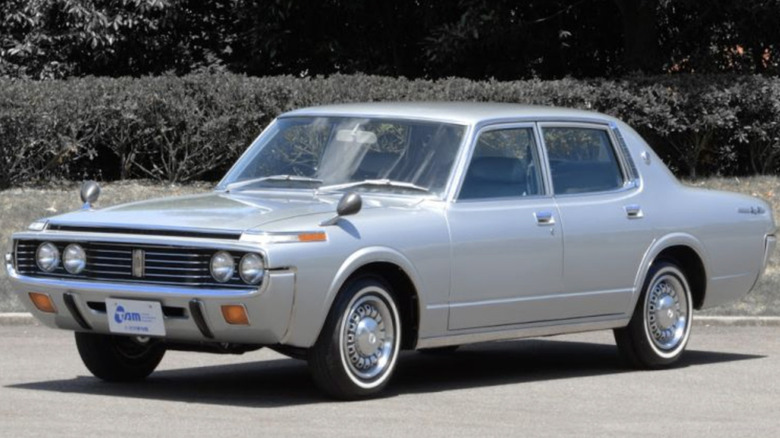
Introduced in 1971, the fourth-generation Toyota Crown introduced a new set of technologies and standards that would become foundational to the nameplate's future. Perhaps the most important achievement of the S60 and S70 models was the name. At that point, the past models had been called the Toyopet, and the fourth generation was the first to officially be called the Crown. The 4th generation introduced a handful of long-standing trim levels: Super Saloon, Deluxe, and Super Deluxe.
Most mechanical components were retained from the outgoing model, although the S60 introduced a new automatic transmission and an anti-skid braking system; most of its internals were borrowed from its predecessor. However, its exterior was entirely different, boasting a sleeker, more aerodynamic look with refined lines and proportions. Consumers didn't love the look of the Crown at the time, but it innovated, preventing the name from faltering into its fourth generation, when many cars begin to feel stale.
4. Crown S40 (2nd Generation)
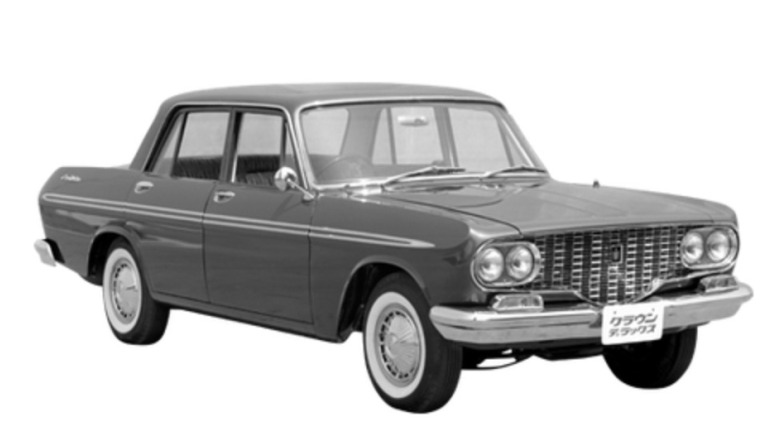
The second iteration of the Crown, still called the Toyopet at this point, came out in 1962. The S40 debuted the new station wagon body style alongside the classic sedan, and it sharpened the idea that was the original Crown. The S40 was redesigned from the ground up, inside and out. It brought to life the more stately appearance we're used to, replacing the first generation's cutesy looks, and it rode on a new X-frame chassis.
Its 1.9-liter four-cylinder was more powerful, and allowed for higher cruising speeds, and it introduced a three-speed automatic transmission called the Toyoglide. For the 1965 model year, Toyota introduced a 2.0-liter straight-six engine, which produced 104 horsepower in the Deluxe trim and 123 horsepower thanks to a pair of carburetors in the S trim. It was also the first Crown model to be sold in Europe, setting up the Crown as a commonplace nameplate beyond Japan's shores.
3. Crown RS S30 (1st Generation)
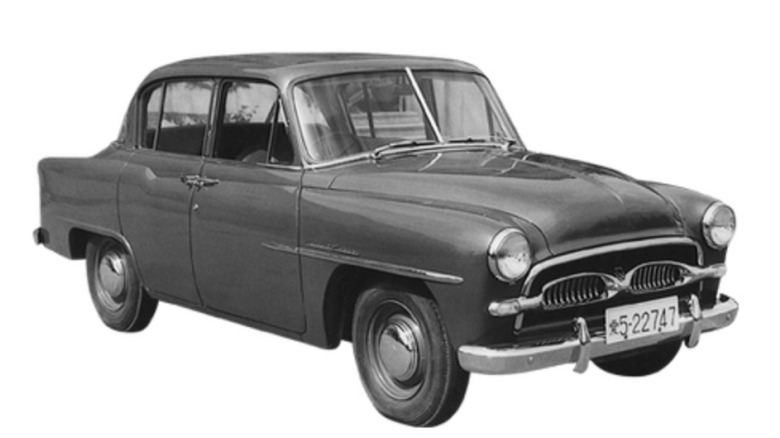
The Crown RS S30 was the one that started it all. Originally introduced in 1955 and based on the Toyota SA platform, the first-generation Crown was aimed at the taxi market rather than individual consumers. In line with this purpose, the first Crown featured front and rear bench seats, allowing the small sedan to carry up to six people. It was equipped with an independent double-wishbone suspension system, which clients praised for its smooth, comfortable ride.
Powering the Crown was a 1.5-liter four-cylinder that produced a modest 48 horsepower, with power sent to the rear wheels via a three-speed manual transmission. To help establish this new nameplate, Toyota entered the Crown into the Round Australia Rally, a 10,000-mile rally in which the Crown finished third place among foreign car entries. The first-generation Crown was durable and reliable for a brand-new nameplate, laying the foundation for a dynasty of 15 generations to come.
2. Crown S50 (3rd Generation)
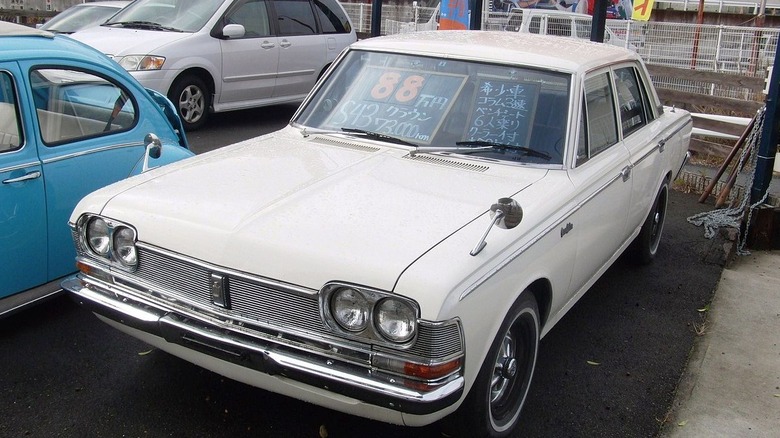
The third generation of the Crown is the definitive edition of the nameplate's early lineage. It built upon the improvements introduced in the second generation, and introduced a variety of new body styles, including a two-door hardtop and a pickup, though the pickup was discontinued at the end of the generation. The most important change of the S50, though, was its market aim. It was the first Crown marketed directly to individual consumers rather than for government and rental agencies, and Toyota changed its paint to popular white to avoid association with black-painted agency vehicles.
It brought a new, elegant design language that perfectly blended streamlined grace with stately bulk. Underneath this new body, Toyota changed the chassis from an X frame to a perimeter-style frame, which would remain the Crown's standard for the next 20 years. The S50 was offered with a variety of four-cylinder and six-cylinder engine options as well. The S50 was the most realized version of the Crown at its time, and it set the mold for which all future Crown models would follow in both style and substance.
1. Crown S150 (10th Generation)
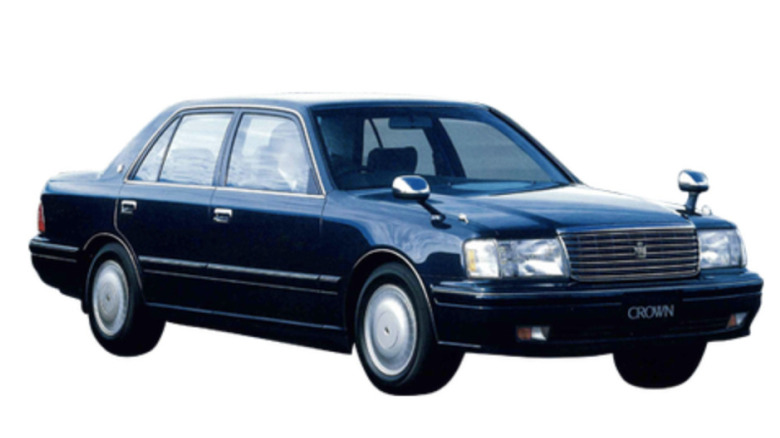
In 1995, the 10th-generation Toyota Crown S150 was born. The S150 was completely redone from the outgoing model, with Toyota highlighting a desire to make a car that was synonymous with dignity, and Japanese taste and craftsmanship. The S150 was marketed to individual and corporate buyers, underscoring the Crown's established, respected reputation across the market. The exterior was a masterfully conservative design that, when viewed in retrospect, summarizes the Crown's classic design language from its early years, while also hinting at its future looks.
It employed a new monocoque body and introduced front- and rear-mounted double-wishbone suspension systems, with engine options including six- and four-cylinder units. Power was distributed to the rear wheels, although four wheel drive could be optioned. The S150 was the definitive Crown because it ticked all the boxes. It was appreciated by both corporate and individual consumers, it mastered and modernized the Crown's distinguished design language, and helped set the Crown up for the continuation of its dynasty into the 2000s.
Methodology
While it might have been easier to make a ranked list based on reliability or sales figures, the measurement of what made one Toyota Crown better than another is best defined by intent, character, and place in the lineage. The Crown is one of the brand's longest-standing models and serves a different purpose from a Corolla or Camry. The Crown is a halo car that showcases the brand's current technologies, craftsmanship, and spirit at the highest level, while previewing future design elements and features across the wider Toyota lineup. Each Crown generation was ranked on how well it met or exceeded in this endeavor of excellence, including status as a halo car, new technologies and innovations, materials, construction quality, and how it advanced the nameplate.