

Ryobi High Capacity Vs. High Performance Batteries: What's The Difference?
We may receive a commission on purchases made from links.
As a tool brand, Ryobi puts a lot of attention on battery power. With so many battery-operated offerings to its name, it's important to know the differences between Ryobi battery types. Take its High Capacity batteries and its High Performance batteries, for example. What sets these two types apart?
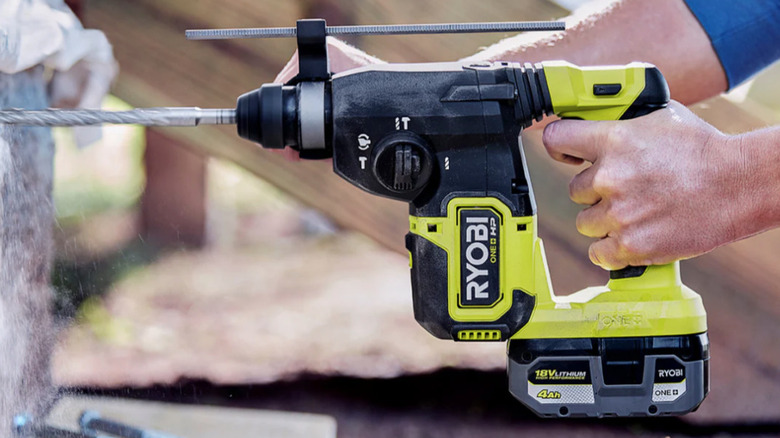
Judging by their name alone, Ryobi's High Capacity batteries were made keep tools running for longer. Originally introduced under the ONE+ battery system, these lithium-ion packs gave people meaningful improvements in battery runtime in a more lightweight package. Depending on the specific model, High Capacity batteries promised you anywhere from two to four times the runtime of earlier Ni-Cd packs while also holding a charge up to four times longer. They were also about 20% lighter (but still added plenty of weight to your tools).
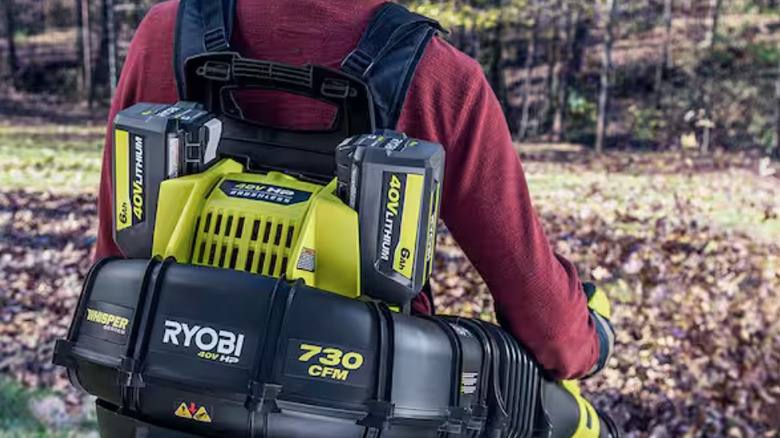
Today, many of these ONE+ High Capacity models are discontinued. (One of the only instances of Ryobi still using the High Capacity branding is with the 40V High Capacity battery, which isn't compatible with the 18V ONE+ or ONE+ HP system.) By comparison, Ryobi's High Performance batteries are still very much available.
The biggest difference comes down to voltage
Unlike the High Capacity models, Ryobi's High Performance batteries are built around upgraded lithium-ion cells and more advanced battery cell tech to give you more power and efficiency during the most demanding applications. High Performance models say they'll give you four times more runtime than previous versions. (That's up to eight times the runtime in all.)
Still, both High Capacity and High Performance batteries come with Ryobi's INTELLICELL technology to help the battery monitor and balance individual cells. Rather than tapering off as the charge drains, INTELLICELL helps the batteries give you consistent power until they die. Both battery types also come with COOL-CORE design that keeps the battery from overheating too badly during extended use. These lower operating temperatures also do a better job protecting the internal components, which should extend the battery life (and give you steadier performance for the life of the battery, as well).
With these two features in common, it's worth repeating the biggest difference: High Capacity batteries have largely been discontinued, while High Performance batteries are still readily available on Ryobi's website or Home Depot. Additionally, the High Performance batteries are compatible with all 18V ONE+ products, while the remaining High Capacity batteries being offered are compatible with the 40V family only.