

UK Program Aims To Bring 3D-Printed Drones To The Battlefield
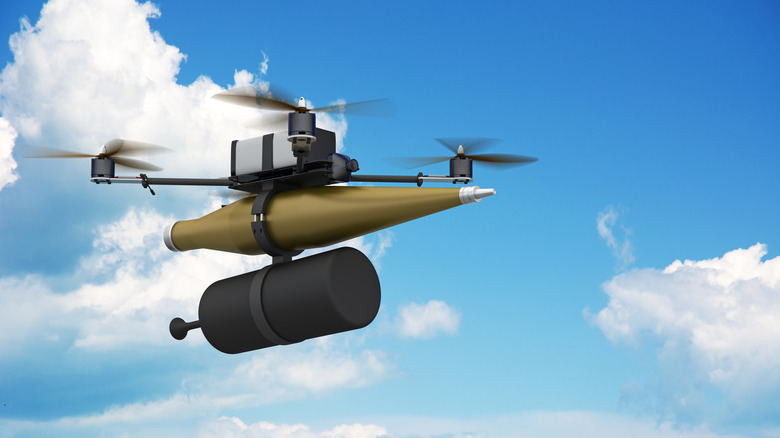
Drones for warfare can be produced relatively cheaply, and in tremendous numbers. They're also small, elusive, and potentially very valuable, whether for recon purposes or when armed with potent explosives. For an army on the move, though, it can be very difficult to maintain them, with access to parts in more remote areas being very limited. There are further limitations too, which is why Ukraine is reliant on several companies to keep its military drone operation afloat.
It's one thing to use supply chains to bring finished, produced models to the front line, but quite another for service members to be able to produce and repair them while on or near the field. It's for this reason that the British army has been exploring the potential of 3D-printed drones. This first came into play for the British during Exercise Bull Storm, a training session on a huge scale that saw 1,200 British soldiers from 11 Brigade engage in combat training in the harsh terrain of Kenya. In such an environment, naturally, a unit is largely reliant on being self-sustaining, and so the difficulty of procuring drones is self-evident. This was where the innovation of 3D printing came in.
As reported in Soldier, Major Steve Watts of 3rd Battalion noted that "we obtained what's called special purpose clearance from the Military Aviation Authority to build and fly our self-made drones during this training." Just how unique this opportunity was, Major Watts wasn't sure, but he added, "I believe it's the first time anyone in the [British] army has done this." A single drone was printed in 3.5 hours or so, with an additional hour required to assemble it. The British produced an experimental total of just five drones during the exercise, but the experience could prove invaluable.
The benefits of 3D-printed drones in warfare
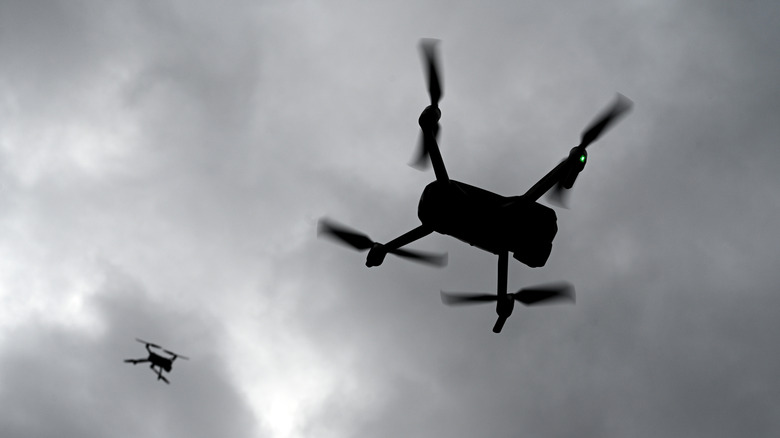
With the disparity between the military resources of Ukraine and Russia, it's no surprise that the former has been a pioneer in the development of 3D-printed drones. Major Steve Watts explained to Soldier that the European nation has adapted the process to its specific needs: "They are printing and building them on the front line as well as back in their factories and they'll design and assemble them to a spec determined by the type of mission that's required."
During Exercise Bull Storm, the British forces used 3D printers developed by China's Bambu Labs. The printers created the drones in a makeshift 'base' that consisted of a camouflaged covering next to a Land Rover. This low-budget operation would be easy to scale up in the future as circumstances dictate. The Defense Post notes that mass-produced models of the same type used in the test would cost the equivalent of about $2,630 each, while the ones used cost approximately $525 per drone to field.
Previously, according to Major Watts, British forces could only "build drones and race them inside the wire, under civilian aviation rules, or fly off-the-shelf platforms if the operators had the right qualifications and permissions." On-the-fly access to the right machinery for the job could be game-changing. In 2026, the British experimentation with the concept continues. The 1st Battalion Irish Guards, having worked with Ukrainian forces during Operation Interflex (an international effort to train Ukrainian soldiers), is just one battalion that has been making use of a new British drone hub to train as operators. January 2026 marked the first complete drone shell that the hub produced. Ukraine's ingenuity with drones, which extends to the working flying shotgun drone, is clearly inspiring other forces.